ObverseInscription or printing placed on the obverse.:
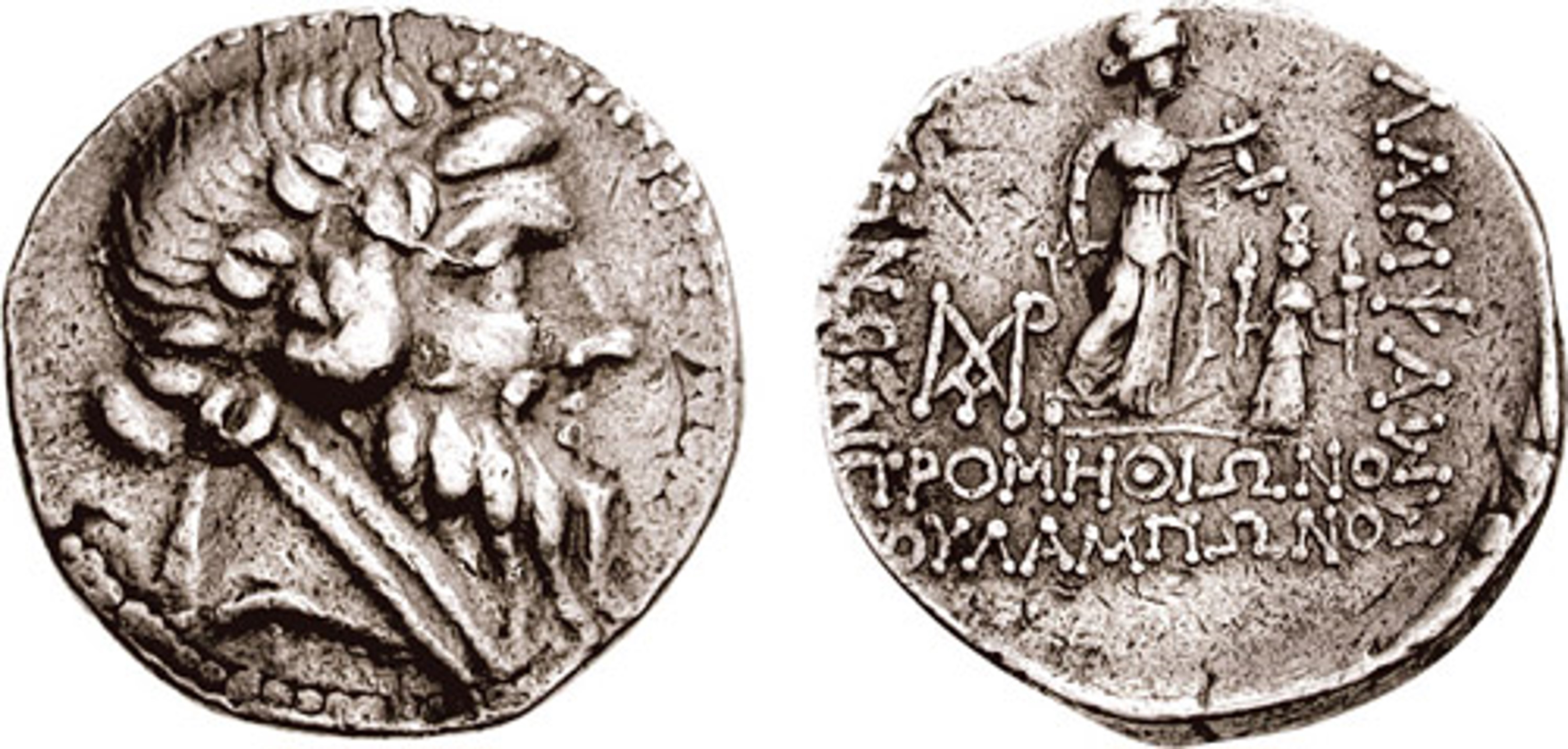
Head of Priapos right, wearing ivy wreath.
ReverseInscription or printing placed on the reverse.:
ΛΑΜΨΑΚΗΝΩΝ ΠΡΟΜΗΘΙΩΝΟΣ ΤΟΥ ΛΑΜΠΩΝΟΣ (Greek) Apollo Citharoedus standing right, holding plectrum in right hand, lyre in left arm. In field, monogram and cult statue of Demeter holding two torches.
Mint and issuing power
MintIdentifies the place of manufacture or issue of a numismatic object.:
AuthorityIdentifies the issuing power. The authority can be "pretended" when the name or the portrait of X is on the coin but he/she was not the issuing power. It can also be "uncertain" when there is no mention of X on the coin but he/she was the issuing power according to the historical sources:
Chronology
FromIdentifies the initial date in a range assigned in a numismatic context. 100 BC toIdentifies the final date in a range assigned in a numismatic context.. 70 BC
Hellenistic 323-30 BCperiodTime period of the numismatic object.
Physical description
MetalThe physical material (usually metal) from which an object is made.: Silver
WeightWeight of the numismatic object (in grams).in grams: 16.6316.63 g <br />16,630 mg <br />
DenominationTerm indicating the value of a numismatic object. Examples: tetradrachm, chalkous, denarius.: tetradrachm
AxisDescribes the directional relationship between the obverse and reverse of a numismatic object.: 1212 mm <br />1.2 cm <br />
"overstruck but undertype not readily identifiable"; Ellis-Evans 2020: "Die breaks on obverse. Overstruck (dotted border of undertype visible on obverse)"
One of the two metallic pieces that are used to strike a coin, one per each side.

 periodTime period of the numismatic object.