AuthorityIdentifies the issuing power. The authority can be "pretended" when the name or the portrait of X is on the coin but he/she was not the issuing power. It can also be "uncertain" when there is no mention of X on the coin but he/she was the issuing power according to the historical sources:
Chronology
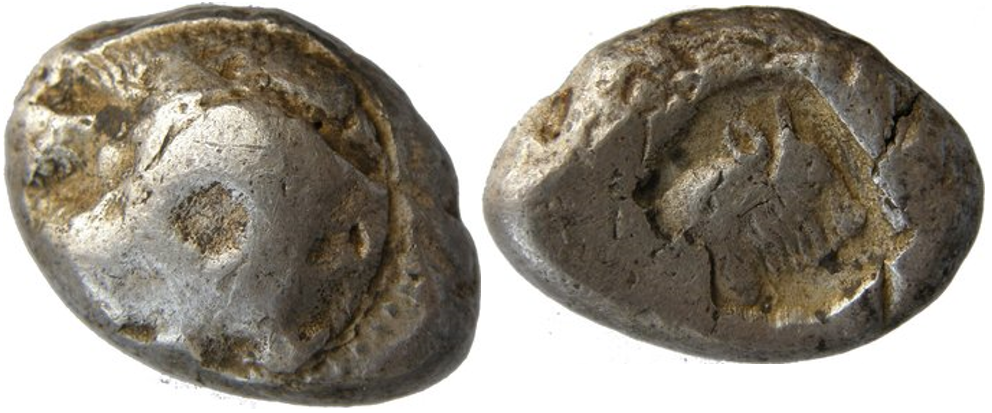
FromIdentifies the initial date in a range assigned in a numismatic context. 499 BCE toIdentifies the final date in a range assigned in a numismatic context.. 495 BCE
Classical 480-323 BCperiodTime period of the numismatic object.
Physical description
MetalThe physical material (usually metal) from which an object is made.: Silver
WeightWeight of the numismatic object (in grams).in grams: 13.3213.32 g <br />13,320 mg <br />
DenominationTerm indicating the value of a numismatic object. Examples: tetradrachm, chalkous, denarius.: tetradrachm
DiameterDescribes diameter of an object (in mm).: 20.520.5 mm <br />2.05 cm <br />
AuthorityIdentifies the authority in whose name (explicitly or implicitly) a numismatic object was issued.ᵖ:
Chronology
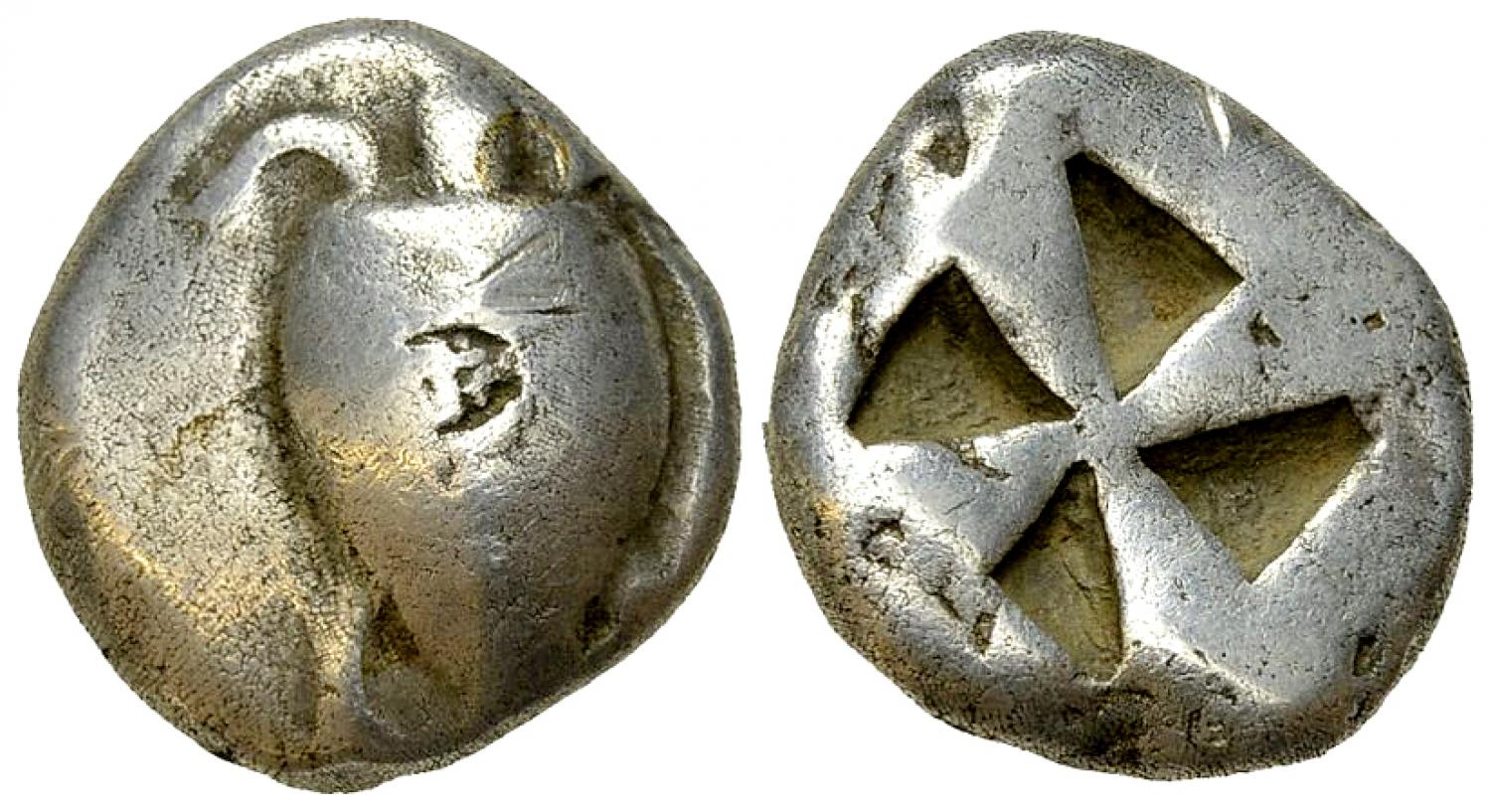
FromIdentifies the initial date in a range assigned in a numismatic context. 520 BCE toIdentifies the final date in a range assigned in a numismatic context.. 480 BCE
Classical 480-323 BCperiodTime period of the numismatic object.
Physical description
DenominationTerm indicating the value of a numismatic object. Examples: tetradrachm, chalkous, denarius.ᵖ:
^Barron, John Penrose (1966), The Silver Coins of Samos, London, xii, 244 p., 32 pl.
abHoover, Oliver D. (2010), The Handbook of Greek Coinage Series, volume 6 : handbook of coins of the islands: Adriatic, Iionian, Thracian, Aegean, and Carpathian seas (excluding Crete and Cyprus), sixth to first centuries BC, Lancaster, 358 p.
^Meadows, Andrew (forthcoming), Greek coinage in the Persian Empire: The Malayer 1934 Hoard (IGCH 1790).


 periodTime period of the numismatic object.