AuthorityIdentifies the issuing power. The authority can be "pretended" when the name or the portrait of X is on the coin but he/she was not the issuing power. It can also be "uncertain" when there is no mention of X on the coin but he/she was the issuing power according to the historical sources:
Chronology
FromIdentifies the initial date in a range assigned in a numismatic context. 420 BCE toIdentifies the final date in a range assigned in a numismatic context.. 410 BCE
Classical 480-323 BCperiodTime period of the numismatic object.
Physical description
MetalThe physical material (usually metal) from which an object is made.: Bronze
WeightWeight of the numismatic object (in grams).in grams: 3.733.73 g <br />3,730 mg <br />
DenominationTerm indicating the value of a numismatic object. Examples: tetradrachm, chalkous, denarius.: dichalkon
DiameterDescribes diameter of an object (in mm).: 16.516.5 mm <br />1.65 cm <br />
AuthorityIdentifies the authority in whose name (explicitly or implicitly) a numismatic object was issued.ᵖ:
Chronology
FromIdentifies the initial date in a range assigned in a numismatic context. 466 BCE toIdentifies the final date in a range assigned in a numismatic context.. 405 BCE
Classical 480-323 BCperiodTime period of the numismatic object.
Physical description
DenominationTerm indicating the value of a numismatic object. Examples: tetradrachm, chalkous, denarius.ᵖ:
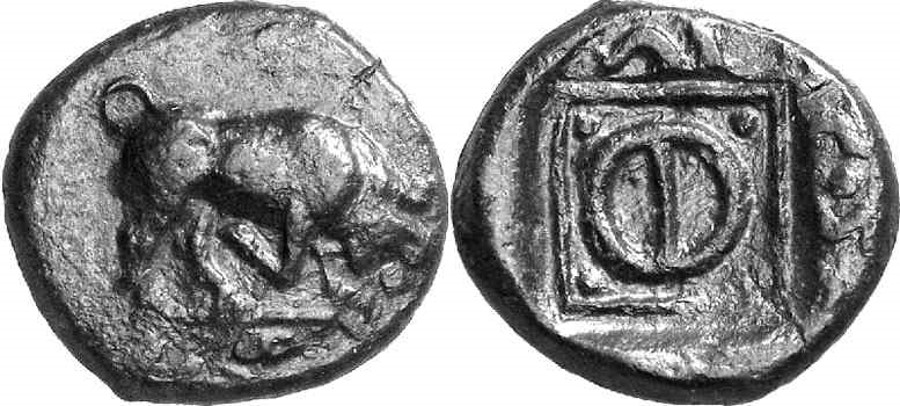
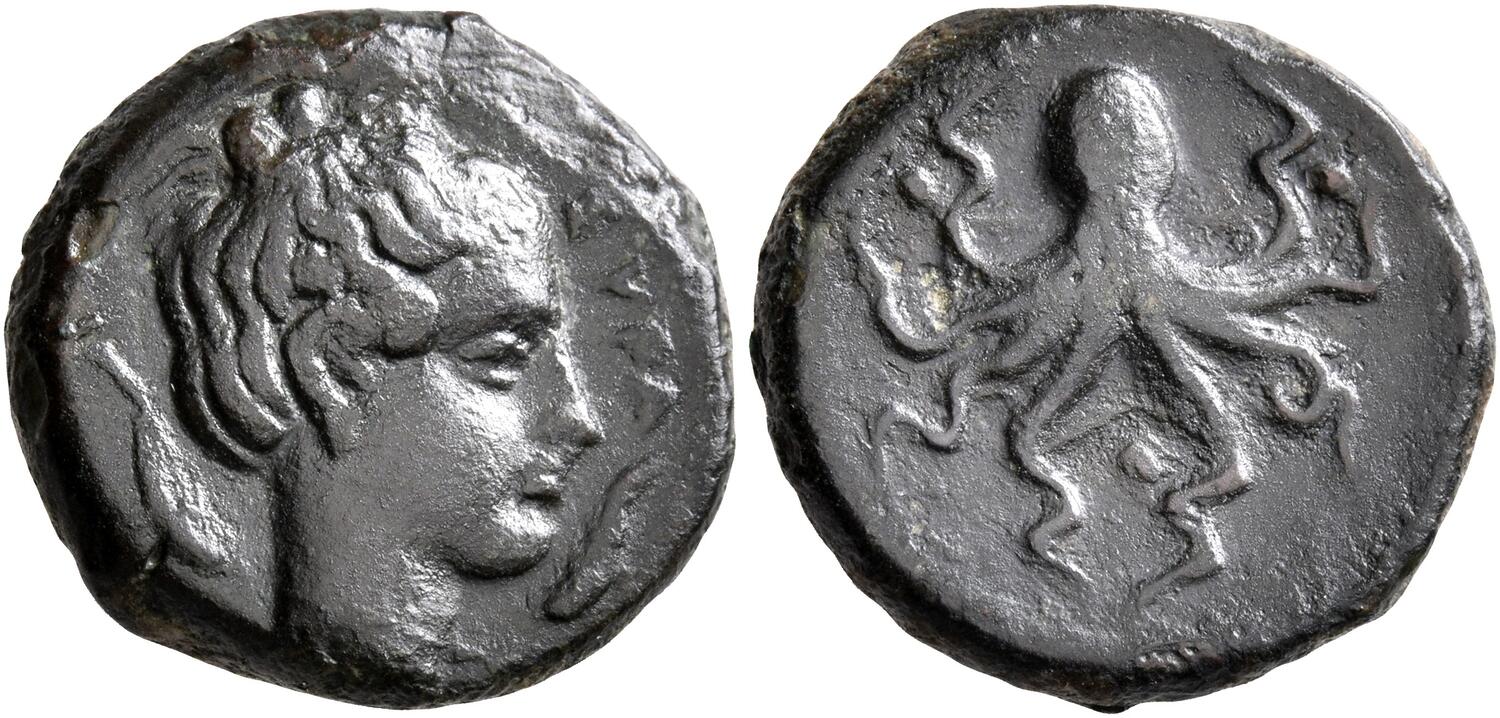
Said to have been found in the northern Peloponnesos. The bronze coinage of Phlious has hitherto been thought to have begun c. 400, but there can be no doubt that the present coin was struck somewhat earlier. The fact that the reverse was struck from a die used to produce silver hemidrachms of the 420s (an amazing occurrence in itself), has to link the coins rather closely in time; but the identity of the undertype makes this coin truly spectacular! Clearly visible on the present reverse, around the incuse square of the Phliasian type, are what appear to be the waving tentacles of an octopus (!), with, in one case, a large pellet between them. This can be nothing other than one of the early (c. 425) onkiai of Syracuse, as Calciati 1(1/20 is a particularly good match) and SNG ANS 376-381: the weight and size is exactly correct (traces of the original obverse can also be seen). Since the original coin is apparently little worn, it must have arrived in Greece shortly after it was issued. This could have occurred around the time of the Peace of Nikias in 421, or after the Athenian defeat at Syracuse in 413, when western travelers would have been easily able to reach Peloponnesian ports without fear of the Athenian fleet. The second known example of this coin is in the Ashmolean, from where BCD received a photograph of it twenty years ago. It was struck from another pair of dies but is clearly overstruck on another Syracusan onkia.

.jpg)
 periodTime period of the numismatic object.