ObverseInscription or printing placed on the obverse.:
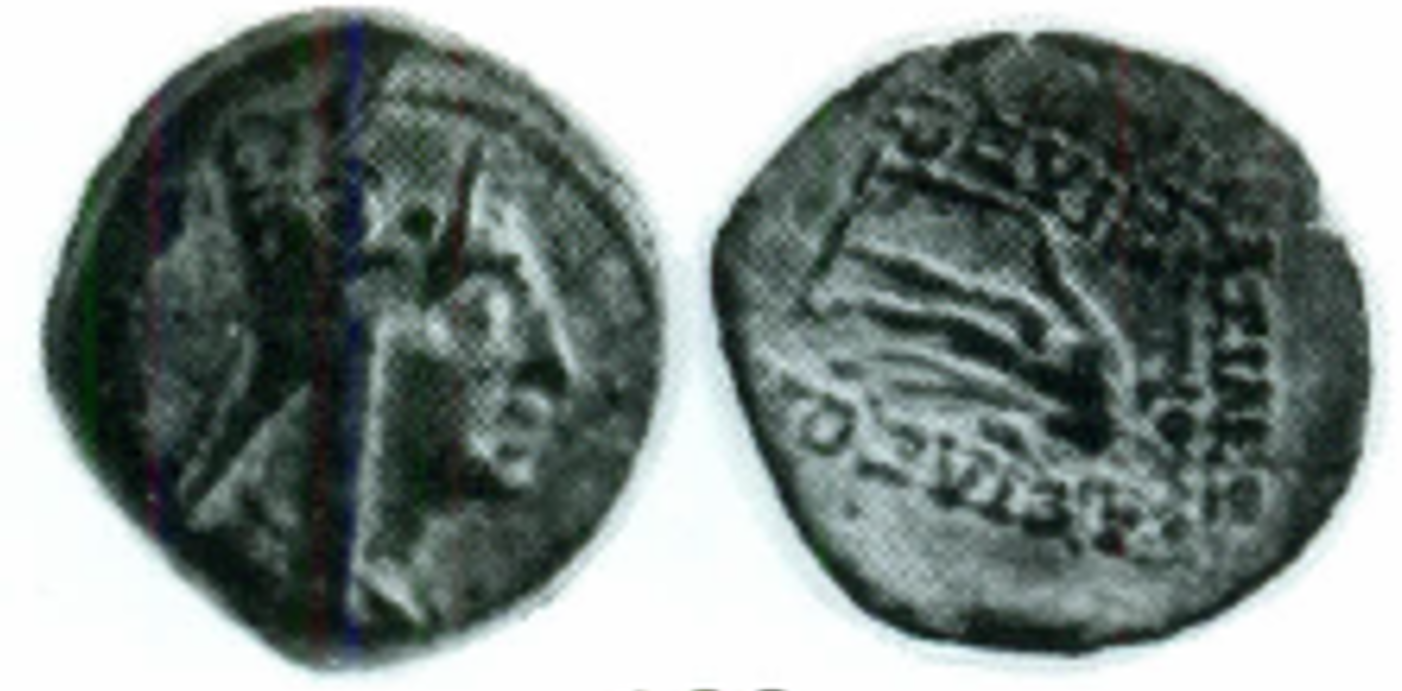
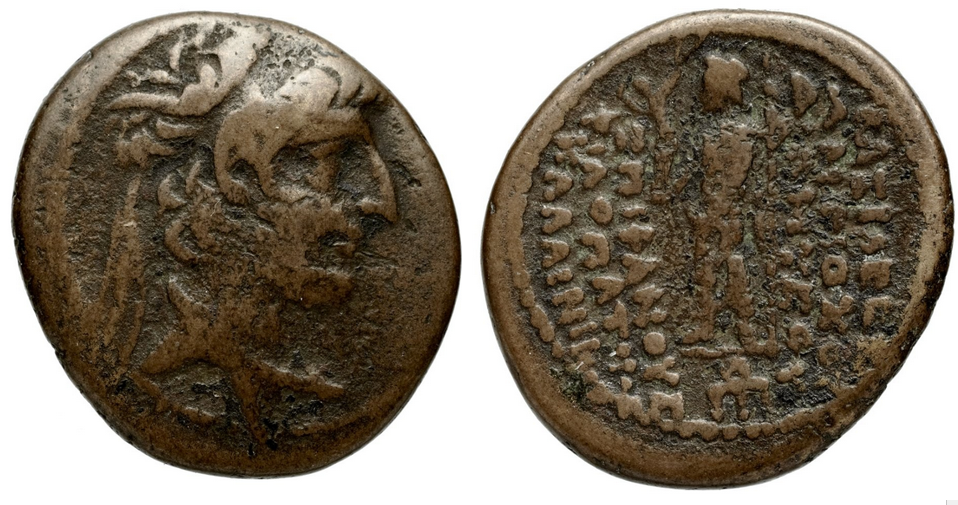
Bust of Tigranes II to right, wearing Armenian tiara decorated with a star between two eagles and tied with a diadem, drapery on shoulders. Border of dots.
ReverseInscription or printing placed on the reverse.:
BAΣIΛEΩΣ BAΣIΛEΩN TIΓPANOY Heracles/Vahagn standing, holding lion's skin and club. In field, monograms.
Mint and issuing power
MintIdentifies the place of manufacture or issue of a numismatic object.:
AuthorityIdentifies the issuing power. The authority can be "pretended" when the name or the portrait of X is on the coin but he/she was not the issuing power. It can also be "uncertain" when there is no mention of X on the coin but he/she was the issuing power according to the historical sources:
FromIdentifies the initial date in a range assigned in a numismatic context. 80 BCE toIdentifies the final date in a range assigned in a numismatic context.. 68 BCE
Hellenistic 323-30 BCperiodTime period of the numismatic object.
Physical description
MetalThe physical material (usually metal) from which an object is made.: Bronze
WeightWeight of the numismatic object (in grams).in grams: 6.126.12 g <br />6,120 mg <br />
DenominationTerm indicating the value of a numismatic object. Examples: tetradrachm, chalkous, denarius.: tetrachalkon
AxisDescribes the directional relationship between the obverse and reverse of a numismatic object.: 33 mm <br />0.3 cm <br />
DiameterDescribes diameter of an object (in mm).: 2121 mm <br />2.1 cm <br />
FromIdentifies the initial date in a range assigned in a numismatic context. 89 BCE toIdentifies the final date in a range assigned in a numismatic context.. 89 BCE
Hellenistic 323-30 BCperiodTime period of the numismatic object.
"Obv.: above and below, letters (visible on reverse: part of legend; rev.: (visible on obverse: traces)"
References
^Bedoukian, Paul Z. (1978), Coinage of the Artaxiads of Armenia, RNS Special Publication Number 10, London, 81 p.
^Nercessian, Yeghia T. (1995), Armenian Coins and Their Values, Armenian Numismatic Society Special Publication 8, Los Angeles.
^Kovacs, Frank (2016), Armenian coinage in the classical period, Classical Numismatic Studies 10, Lancaster, 83 p.
^Gardner, Percy (1878), A Catalogue of the Greek coins in the British Museum. vol. XXII : The Seleucid kings of Syria, London, The Trustees, p. 126, pl. 28.
.png)

 periodTime period of the numismatic object.