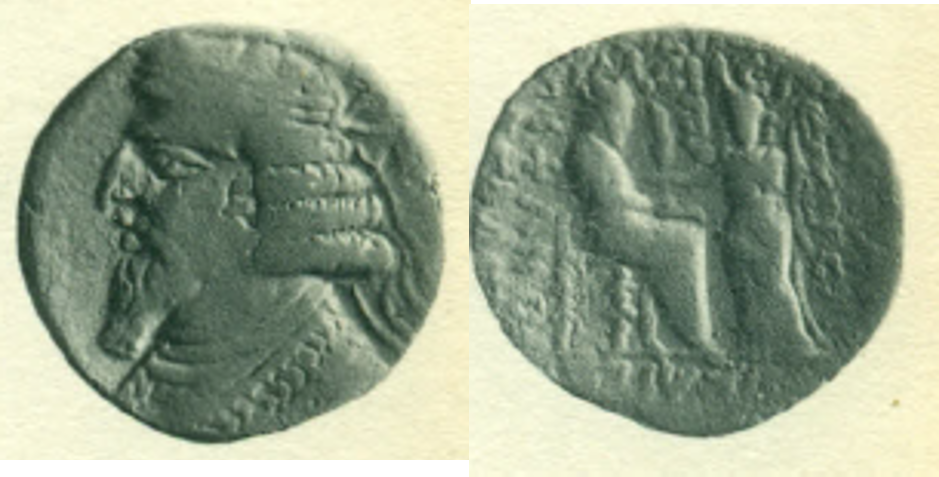
SO 2045 - Seleuceia ad Tigrim over uncertain mint
From SILVER
8 CE - 12 CEBAΣIΛEYΣ BACILEΩN ONΩNHΣ | ΒΑΣΙΛΕΩΣ ΒΑΣΙΛΕΩΝ ΑΡΣΑΚΟΥ ΕΥΕΡΓΕΤΟΥ ΔΙΚΑΙΟΥ ΕΠΙΦΑΝΟΥΣ ΦΙΛΕΛΛΗΝΟΣ
Location/history
| Private collection(s)Private collection(s) ᵖ: | Allotte de la Fuÿe collection |
Overstriking coin
Description
| ObverseInscription or printing placed on the obverse.: | BAΣIΛEYΣ BACILEΩN ONΩNHΣ (Greek) Bust of king left. | ReverseInscription or printing placed on the reverse.: | ΒΑΣΙΛΕΩΣ ΒΑΣΙΛΕΩΝ ΑΡΣΑΚΟΥ ΕΥΕΡΓΕΤΟΥ ΔΙΚΑΙΟΥ ΕΠΙΦΑΝΟΥΣ ΦΙΛΕΛΛΗΝΟΣ (Greek) Nike walking left, holding wreath and palm, ΓΚΤ (year 323) before, Apellaus (month) in exergue. |
Mint and issuing power
| MintIdentifies the place of manufacture or issue of a numismatic object.: | Seleuceia ad Tigrim | Ancient regionAncient region. | Mesopotamia | Modern countryModern country: Iraq | AuthorityIdentifies the issuing power. The authority can be "pretended" when the name or the portrait of X is on the coin but he/she was not the issuing power. It can also be "uncertain" when there is no mention of X on the coin but he/she was the issuing power according to the historical sources: | Parthian Empire, Vonones I of Parthia (king of the Parthia, 8-12 AD) |
Chronology
| FromIdentifies the initial date in a range assigned in a numismatic context. 8 CE toIdentifies the final date in a range assigned in a numismatic context.. 12 CE | Roman from 30 BC |
Physical description
| MetalThe physical material (usually metal) from which an object is made.: Billon http://nomisma.org/id/billon | DenominationTerm indicating the value of a numismatic object. Examples: tetradrachm, chalkous, denarius.: tetradrachm |
||
References
| Coin referenceReference of the Coin: | Fuÿe 1904, p.174-196, n° 6 | Coin series referenceReference to coin series study: | Sellwood 19801Sellwood 1980, n°60.1-4, Shore 19932Shore 1993, n°328, Nelson 20113Nelson 2011, n°406 |
Overstruck type
Description
| ObverseInscription or printing placed on the obverse.: | bust l. wearing diadem | ReverseInscription or printing placed on the reverse.: | ΒΑΣΙΛΕΩΣ ΒΑΣΙΛΕΩΝ ΑΡΣΑΚΟΥ ΑΡΤΑΒΑΝΟΥ ΔΙΚΑΙΟΥ ΕΠΙΦΑΝΟΥΣ ΦΙΛΕΛΛΗΝΟΣ (Greek) king seated left on throne, Tyche standing before him |
Mint and issuing power
| MintIdentifies the place of manufacture or issue of a numismatic object. ᵖ: | Seleuceia ad Tigrim | Ancient regionAncient region. ᵖ | Mesopotamia | Modern countryModern country: Iraq | AuthorityIdentifies the authority in whose name (explicitly or implicitly) a numismatic object was issued. ᵖ: | Artabanus III of Parthia (prince of Parthia, c.79-81 CE), Parthian Empire |
Chronology
| FromIdentifies the initial date in a range assigned in a numismatic context. 79 CE toIdentifies the final date in a range assigned in a numismatic context.. 81 CE | Roman from 30 BC |
Physical description
| DenominationTerm indicating the value of a numismatic object. Examples: tetradrachm, chalkous, denarius. ᵖ: | tetradrachm |
References
| Coin type referenceReference to coin series study ᵖ: | Sellwood 19801Sellwood 1980, n°61, Shore 19932Shore 1993, n°330 |
Additional data
| Frequency of overstrikesFrequency of overstrikes: | frequent | Level of confidenceLevel of confidence of the identification: | weak |
| RemarksRemarks: | undertype uncertain | ||
References
- a b Sellwood, David (1980), An introduction to the coinage of Parthia, 2nd ed., London, Spink & Son, 322 p., 10 pl.
- a b Shore, Fred B. (1993), Parthian coins & history : ten dragons against Rome, Classical Numismatic Group, p.188
- ^ Nelson, Bradley R. (2011), Numismatic Art of Persia: The Sunrise Collection Part I: Ancient- 650 BC to AD 650, Lancaster