2102 - Antioch (Philip I) (tetradrachm Philip/Zeus) over uncertain type (Triton, V, Jan. 2002, 1509): Difference between revisions
From SILVER
No edit summary |
No edit summary |
||
| Line 16: | Line 16: | ||
|Coin series reference=SNG Israel I, n° 2820 var. (slightly different monogram left, same obverse die) ; SC II, n° 2463 | |Coin series reference=SNG Israel I, n° 2820 var. (slightly different monogram left, same obverse die) ; SC II, n° 2463 | ||
|Coin series web reference=https://numismatics.org/sco/id/sc.1.2463 | |Coin series web reference=https://numismatics.org/sco/id/sc.1.2463 | ||
|Remarks=overstruck or double struck, with a full second profile visible. | |||
}} | }} | ||
Revision as of 15:59, 2 June 2023
93 BCE - 83 BCE | ΒΑΣΙΛΕΩΣ ΦΙΛΙΠΠΟΥ ΕΠΙΦΑΝΟΥ ΦΙΛΑΔΕΛΦΟΥ
Images
Overstriking coin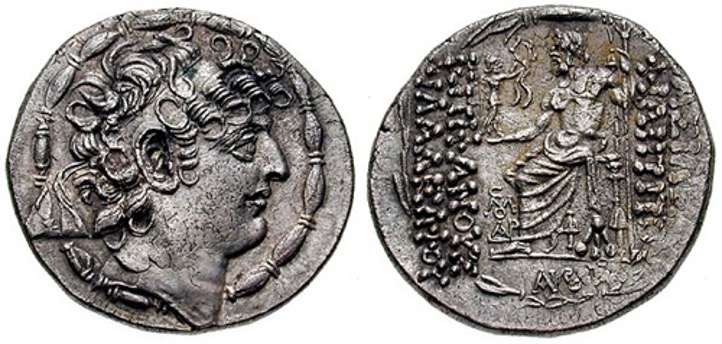

SO 1187 - Uncertain mint over uncertain mint.jpg
Location/history
| Sale(s)Sale(s) ᵖ: | Triton 5 (15/01/2002), lot 1509. | |
Overstriking coin
Description
| ObverseInscription or printing placed on the obverse.: | Head of Philip right, wearing diadem. | ReverseInscription or printing placed on the reverse.: | ΒΑΣΙΛΕΩΣ ΦΙΛΙΠΠΟΥ ΕΠΙΦΑΝΟΥ ΦΙΛΑΔΕΛΦΟΥ (Greek) Zeus seated left, holding Nike and scepter. Under the throne, monogram. In left field, monograms. In exergue, monogram. All within laureal wreath. |
Mint and issuing power
| MintIdentifies the place of manufacture or issue of a numismatic object.: | Antioch | Ancient regionAncient region. | Syria (Seleucis and Pieria) | Modern countryModern country: Turkey | AuthorityIdentifies the issuing power. The authority can be "pretended" when the name or the portrait of X is on the coin but he/she was not the issuing power. It can also be "uncertain" when there is no mention of X on the coin but he/she was the issuing power according to the historical sources: | Philip I Epiphanes Philadelphus (Seleucid king, 94/3-76/5 BC), Seleucid Dynasty (312-63 BC) |
Chronology
| FromIdentifies the initial date in a range assigned in a numismatic context. 93 BCE toIdentifies the final date in a range assigned in a numismatic context.. 83 BCE | hellenistic periodTime period of the numismatic object. |
Physical description
MetalThe physical material (usually metal) from which an object is made.: Silver 
|
WeightWeight of the numismatic object (in grams). in grams: 15.4815.48 g <br />15,480 mg <br /> | DenominationTerm indicating the value of a numismatic object. Examples: tetradrachm, chalkous, denarius.: tetradrachm
|
|
References
| Coin referenceReference of the Coin: | Coin series referenceReference to coin series study: | SNG Israel I1SNG Israel I, n° 2820 var. (slightly different monogram left, same obverse die), SC II2SC II, n° 2463 | |
| Coin series web referenceCoin series web references: | |||
Overstruck type
Description
| ObverseInscription or printing placed on the obverse.: | ReverseInscription or printing placed on the reverse.: |
Mint and issuing power
| MintIdentifies the place of manufacture or issue of a numismatic object. ᵖ: | Ancient regionAncient region. ᵖ | Modern countryModern country: | AuthorityIdentifies the authority in whose name (explicitly or implicitly) a numismatic object was issued. ᵖ: |
Chronology
| FromIdentifies the initial date in a range assigned in a numismatic context. toIdentifies the final date in a range assigned in a numismatic context.. | periodTime period of the numismatic object. |
Physical description
References
| Coin type referenceReference to coin series study ᵖ: |
Additional data
| Frequency of overstrikesFrequency of overstrikes: | Level of confidenceLevel of confidence of the identification: | ||
| RemarksRemarks: | overstruck or double struck, with a full second profile visible. | ||