1317 - Maroneia (tetradrachm Dionysus/Dionysus) over Aesillas (Alexander/club) (Münzen & Medaillen, 32, May 2010, 22): Difference between revisions
From SILVER
No edit summary |
|||
| Line 16: | Line 16: | ||
|Metal=Silver | |Metal=Silver | ||
|Weight=16.35 | |Weight=16.35 | ||
|Denomination= | |Denomination=tetradrachm | ||
|Standard=Attic | |Standard=Attic | ||
|Coin series reference=Schönert-Geiss 1987, M. 191, 1119; HGC 3.2, n° 1556 | |Coin series reference=Schönert-Geiss 1987, M. 191, 1119; HGC 3.2, n° 1556 | ||
Latest revision as of 10:23, 18 February 2024
85 BCE - 70 BCE | ΔIONYΣOY ΣΩTHPΩΣ MAPΩNITΩN
Images
Overstriking coin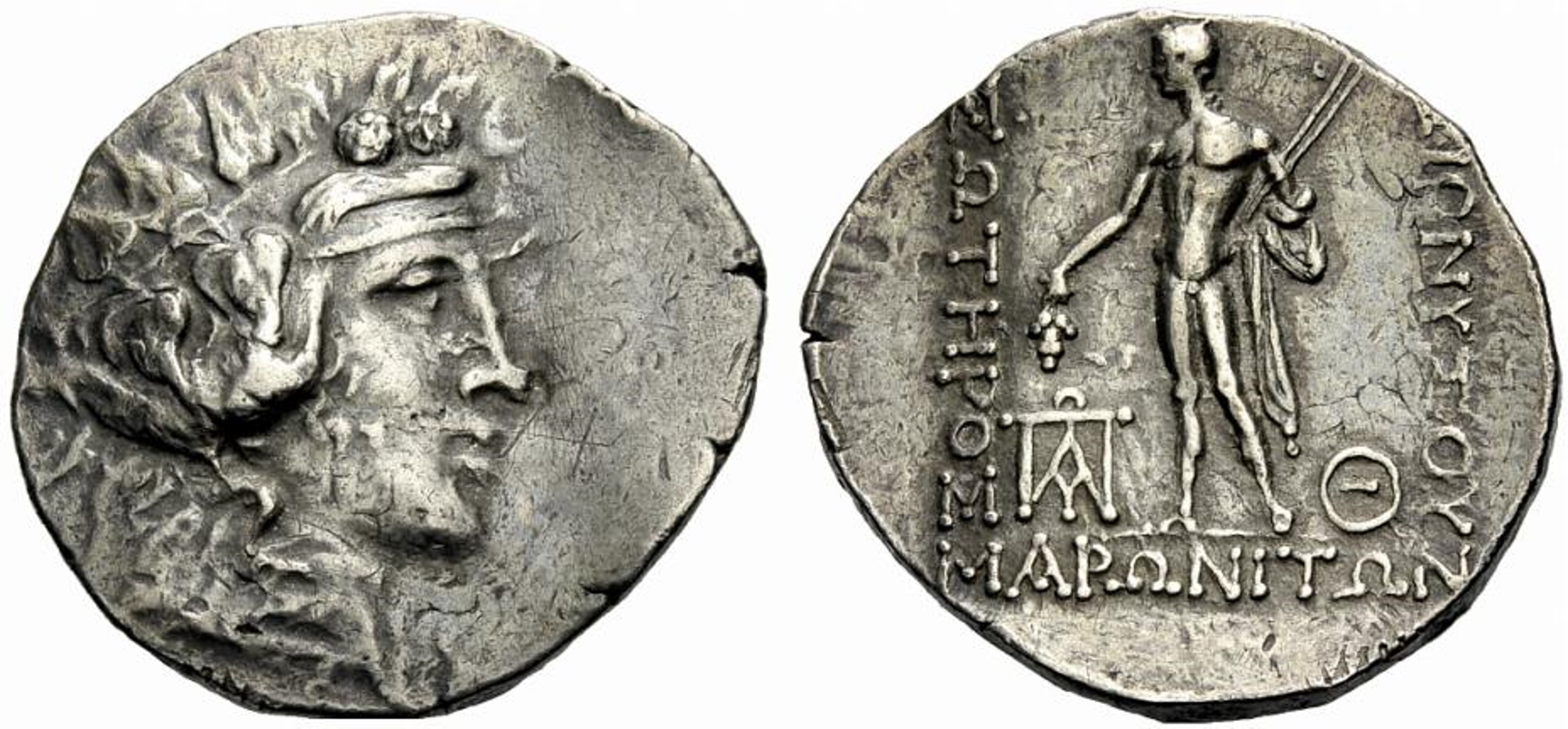

Maroneia on uncertain - Münzen.jpeg [1]
Overstruck variety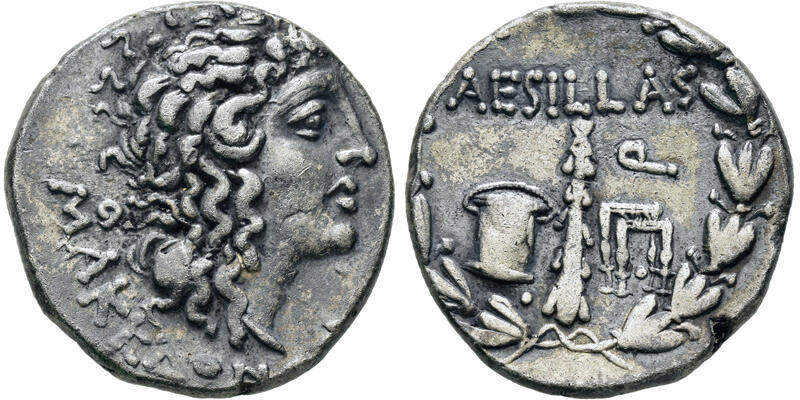

Aesillas 2nd group.jpg
Location/history
| Sale(s)Sale(s) ᵖ: | Münzen & Medaillen, 32, 26 May 2010, 22 | |
Overstriking coin
Description
| ObverseInscription or printing placed on the obverse.: | Wreathed head of young Dionysos right | ReverseInscription or printing placed on the reverse.: | ΔIONYΣOY ΣΩTHPΩΣ MAPΩNITΩN (Greek) Dionysos standing half-left, holding grapes and narthex stalks, monograms to inner left and right |
Mint and issuing power
| MintIdentifies the place of manufacture or issue of a numismatic object.: | Maroneia | Ancient regionAncient region. | Thrace | Modern countryModern country: Greece | AuthorityIdentifies the issuing power. The authority can be "pretended" when the name or the portrait of X is on the coin but he/she was not the issuing power. It can also be "uncertain" when there is no mention of X on the coin but he/she was the issuing power according to the historical sources: | Roman Republic |
Chronology
| FromIdentifies the initial date in a range assigned in a numismatic context. 85 BCE toIdentifies the final date in a range assigned in a numismatic context.. 70 BCE | Hellenistic 323-30 BC  periodTime period of the numismatic object. periodTime period of the numismatic object.
|
Physical description
| MetalThe physical material (usually metal) from which an object is made.: Silver
|
WeightWeight of the numismatic object (in grams). in grams: 16.3516.35 g <br />16,350 mg <br /> | DenominationTerm indicating the value of a numismatic object. Examples: tetradrachm, chalkous, denarius.: tetradrachm
|
|
| StandardStandard.: Attic | |||
References
| Coin referenceReference of the Coin: | Coin series referenceReference to coin series study: | Schönert-Geiss 19871Schönert-Geiss 1987, M. 191, 1119, HGC 3.22HGC 3.2, n° 1556 |
Overstruck type
Description
| ObverseInscription or printing placed on the obverse.: | MAKEΔONΩN (Greek) Head of Alexander the Great to right, with horn of Ammon over his ear | ReverseInscription or printing placed on the reverse.: | AESILLAS (Latin) Money chest, club and quaestor's chair, Q in right field, all within wreath |
Mint and issuing power
| MintIdentifies the place of manufacture or issue of a numismatic object. ᵖ: | Thessalonica | Ancient regionAncient region. ᵖ | Macedon | Modern countryModern country: Greece | AuthorityIdentifies the authority in whose name (explicitly or implicitly) a numismatic object was issued. ᵖ: | Aesillas (quaestor in the Roman province of Macedonia in c. 90 BC), Roman Republic |
Chronology
| FromIdentifies the initial date in a range assigned in a numismatic context. 95 BCE toIdentifies the final date in a range assigned in a numismatic context.. 65 BCE | Hellenistic 323-30 BC periodTime period of the numismatic object.
|
Physical description
| DenominationTerm indicating the value of a numismatic object. Examples: tetradrachm, chalkous, denarius. ᵖ: | tetradrachm
|
StandardStandard. ᵖ: | Attic |
References
| Coin type referenceReference to coin series study ᵖ: | Bauslaugh 20003Bauslaugh 2000 |
Additional data
| Frequency of overstrikesFrequency of overstrikes: | rare and concentrated | Level of confidenceLevel of confidence of the identification: | sure |
| RemarksRemarks: | Likely to be of the 2nd group of Aesillas, post 85 BCE, with wide and short leaves (see Callataÿ 1996b) | ||