AuthorityIdentifies the issuing power. The authority can be "pretended" when the name or the portrait of X is on the coin but he/she was not the issuing power. It can also be "uncertain" when there is no mention of X on the coin but he/she was the issuing power according to the historical sources:
FromIdentifies the initial date in a range assigned in a numismatic context. 150 BCE toIdentifies the final date in a range assigned in a numismatic context.. 100 BCE
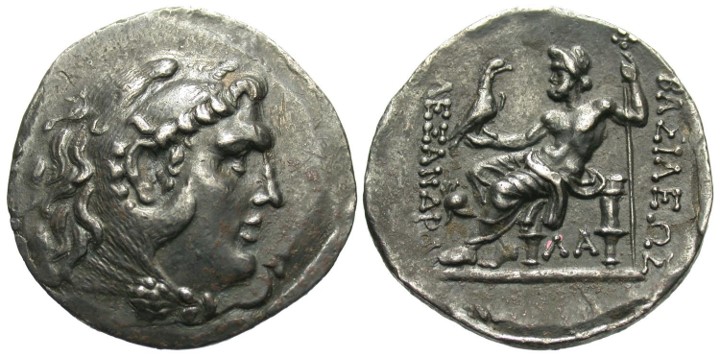
Hellenistic 323-30 BCperiodTime period of the numismatic object.
Physical description
MetalThe physical material (usually metal) from which an object is made.: Silver
WeightWeight of the numismatic object (in grams).in grams: 16.6116.61 g <br />16,610 mg <br />
DenominationTerm indicating the value of a numismatic object. Examples: tetradrachm, chalkous, denarius.: tetradrachm
AxisDescribes the directional relationship between the obverse and reverse of a numismatic object.: 1212 mm <br />1.2 cm <br />
DiameterDescribes diameter of an object (in mm).: 3232 mm <br />3.2 cm <br />
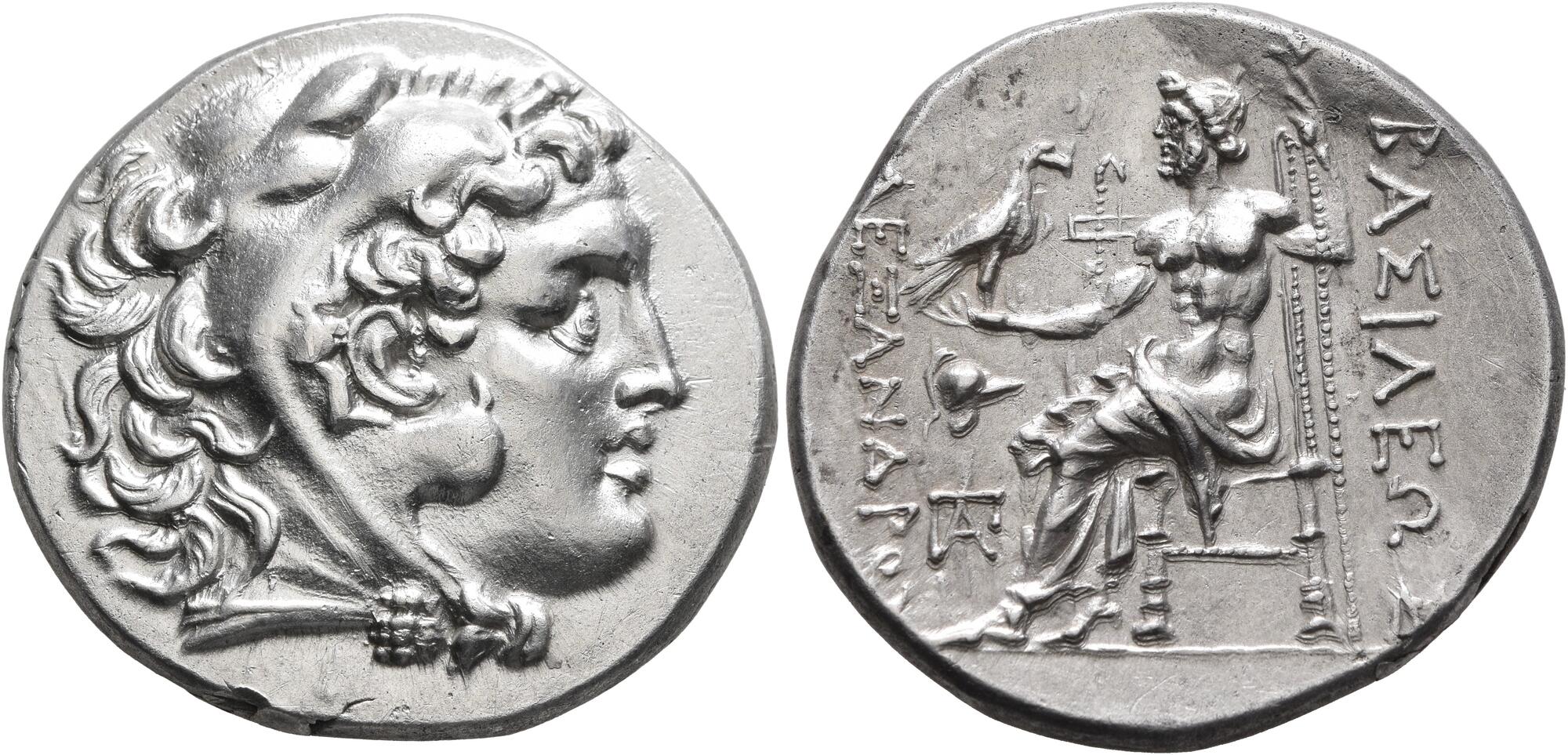
FromIdentifies the initial date in a range assigned in a numismatic context. 332 BCE toIdentifies the final date in a range assigned in a numismatic context.. 100 BCE
Hellenistic 323-30 BCperiodTime period of the numismatic object.
Physical description
DenominationTerm indicating the value of a numismatic object. Examples: tetradrachm, chalkous, denarius.ᵖ:
^Karayotov, Ivan (1994), The coinage of Mesambria. vol. 1: silver and gold coins of Mesambria, Centre of Underwater Archaeology, Sozopol, 134 p. and 44 pl.
^Price, Martin Jessop (1991), The Coinage in the Name of Alexander the Great and Philip Arrhidaeus: a British Museum Catalogue, 2 vol., Zürich-London, 637 p., 637 p., clix pl.


 periodTime period of the numismatic object.