AuthorityIdentifies the issuing power. The authority can be "pretended" when the name or the portrait of X is on the coin but he/she was not the issuing power. It can also be "uncertain" when there is no mention of X on the coin but he/she was the issuing power according to the historical sources:
Chronology
FromIdentifies the initial date in a range assigned in a numismatic context. 455 BCE toIdentifies the final date in a range assigned in a numismatic context.. 430 BCE
Classical 480-323 BCperiodTime period of the numismatic object.
Physical description
MetalThe physical material (usually metal) from which an object is made.: Silver
WeightWeight of the numismatic object (in grams).in grams: 17.1717.17 g <br />17,170 mg <br />
DenominationTerm indicating the value of a numismatic object. Examples: tetradrachm, chalkous, denarius.: tetradrachm
ReverseInscription or printing placed on the reverse.:
ΣEΛINOΣ (Greek) Salinas standing left, holding phiale and laurel branch. To left, rooster standing before altar. To right, bull standing left on basis.
Mint and issuing power
MintIdentifies the place of manufacture or issue of a numismatic object.ᵖ:
AuthorityIdentifies the authority in whose name (explicitly or implicitly) a numismatic object was issued.ᵖ:
Chronology
FromIdentifies the initial date in a range assigned in a numismatic context. 450 BCE toIdentifies the final date in a range assigned in a numismatic context.. 440 BCE
Classical 480-323 BCperiodTime period of the numismatic object.
Physical description
DenominationTerm indicating the value of a numismatic object. Examples: tetradrachm, chalkous, denarius.ᵖ:
^Sylloge Nummorum Graecorum ANS 4. The Collection of the American Numismatic Society. Sicily 2 (Galaria - Styella), New York, 1977, 25 pl.
^Boehringer, Christof (1998), "Zur Muenzgeschichte von Leontinoi in klassischer Zeit", in: Ashton, Richard - Hurter, Silvia (eds), Studies in Greek numismatics in memory of Martin Jessop Price, London, Spink, p.43-53.
abHoover, Oliver D. (2012), The Handbook of Greek Coinage Series. 2. Handbook of the Coins of Sicily (Including Lipara). Civic, Royal, Siculo-Punic, and Romano-Sicilian Issues. Sixth to First Centuries BC, Lancaster-London, 489 p.
^Schwabacher, Willy (1925), "Die Tetradrachmenprägung von Selinunt", Mitteilungen der Bayerischen Numismatischen Gesellschaft, XLIII, p. 1-89, pl. I-III.
^Sylloge Nummorum Graecorum, Great Britain Vol. 2 : The Lloyd Collection. Part 1-2 Etruria to Thurium, Part 3-4 Velia to Eryx, Part 5-6 Galaria to Selinus, Part 7-8 Syracuse to Lipara
^Boehringer, Christof (1997), "Konkordanz und Nachtrag zum Muenzfund von Selinunte 1923 (IGCH 2084)", Revue Suisse de Numismatique vol. 76, p. 5-18, pl. 4.
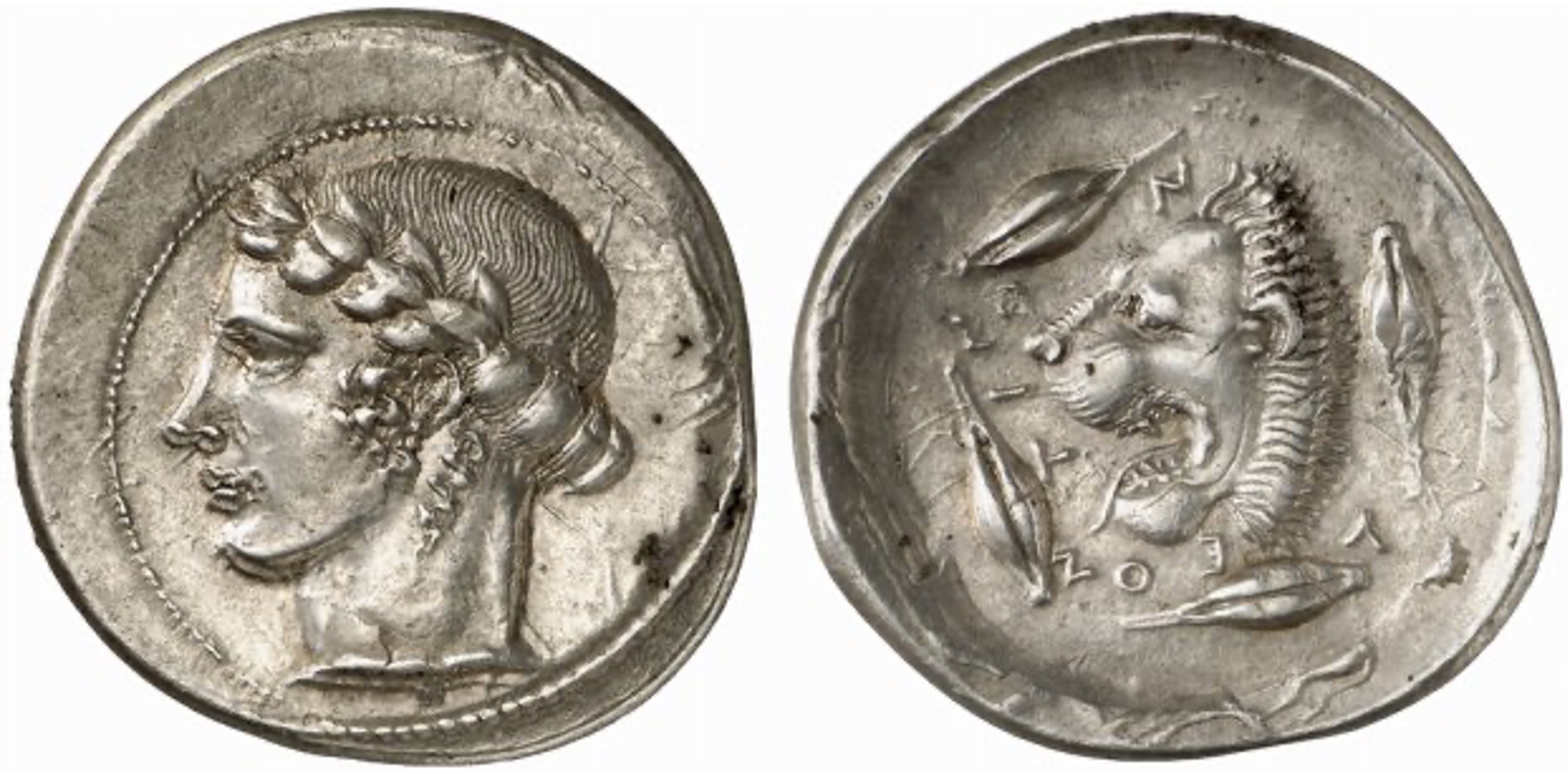
.jpg)
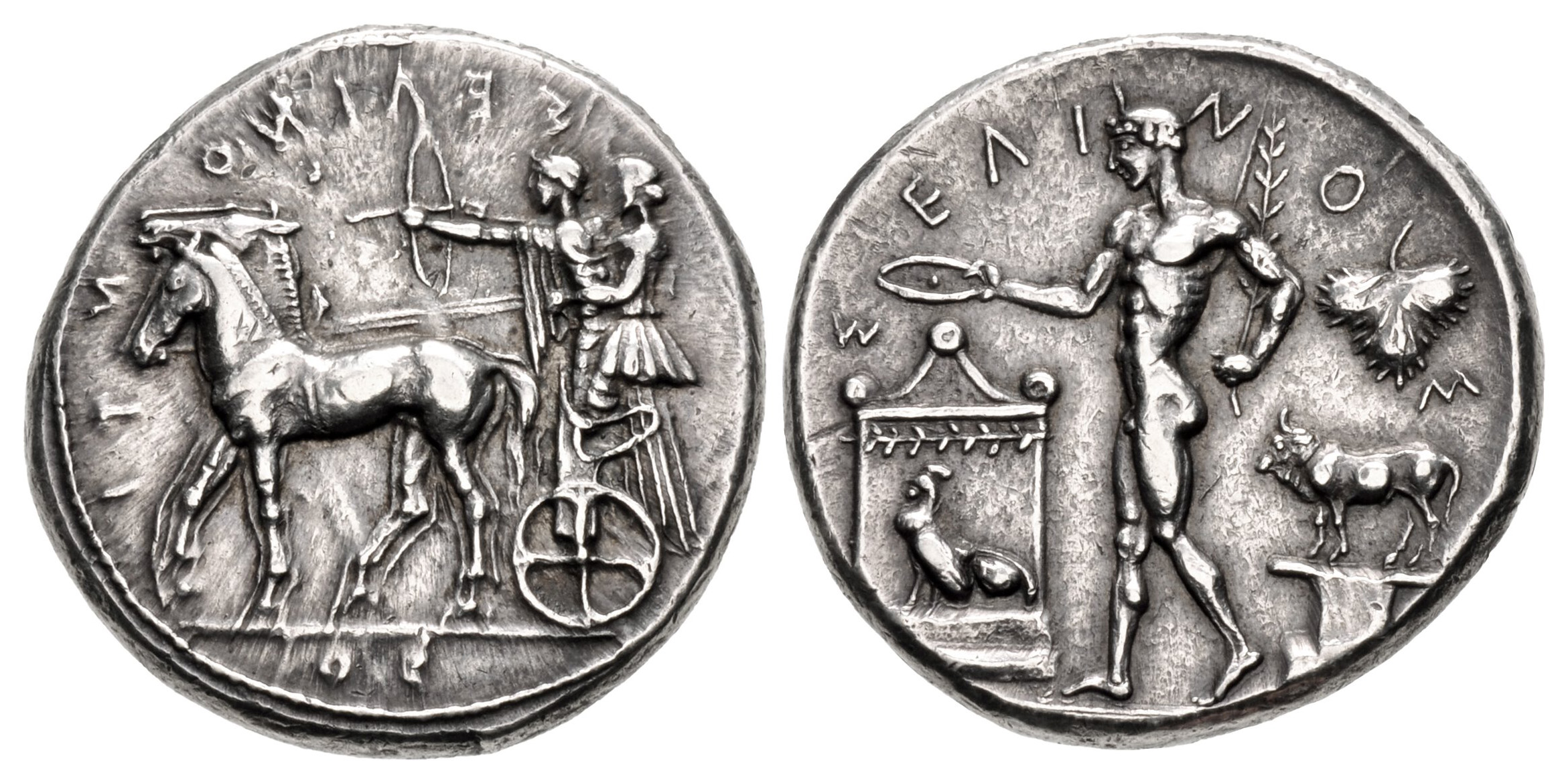

 periodTime period of the numismatic object.