ObverseInscription or printing placed on the obverse.:
Youth on horse right, crowning horse, below a second youth examines horse's hoof, in right field, Φ
ReverseInscription or printing placed on the reverse.:
TAPAΣ (Greek) Male character (Taras or Phalanthos), nude, seated sideways on dolphin left, holding oinoche in one hand and trident and shield in other. Below, E and wave pattern.
Mint and issuing power
MintIdentifies the place of manufacture or issue of a numismatic object.:
AuthorityIdentifies the issuing power. The authority can be "pretended" when the name or the portrait of X is on the coin but he/she was not the issuing power. It can also be "uncertain" when there is no mention of X on the coin but he/she was the issuing power according to the historical sources:
Chronology
FromIdentifies the initial date in a range assigned in a numismatic context. 343 BCE toIdentifies the final date in a range assigned in a numismatic context.. 340 BCE
Classical 480-323 BCperiodTime period of the numismatic object.
Physical description
MetalThe physical material (usually metal) from which an object is made.: Silver
WeightWeight of the numismatic object (in grams).in grams: 7.887.88 g <br />7,880 mg <br />
DenominationTerm indicating the value of a numismatic object. Examples: tetradrachm, chalkous, denarius.: nomos
AxisDescribes the directional relationship between the obverse and reverse of a numismatic object.: 77 mm <br />0.7 cm <br />
ObverseInscription or printing placed on the obverse.:
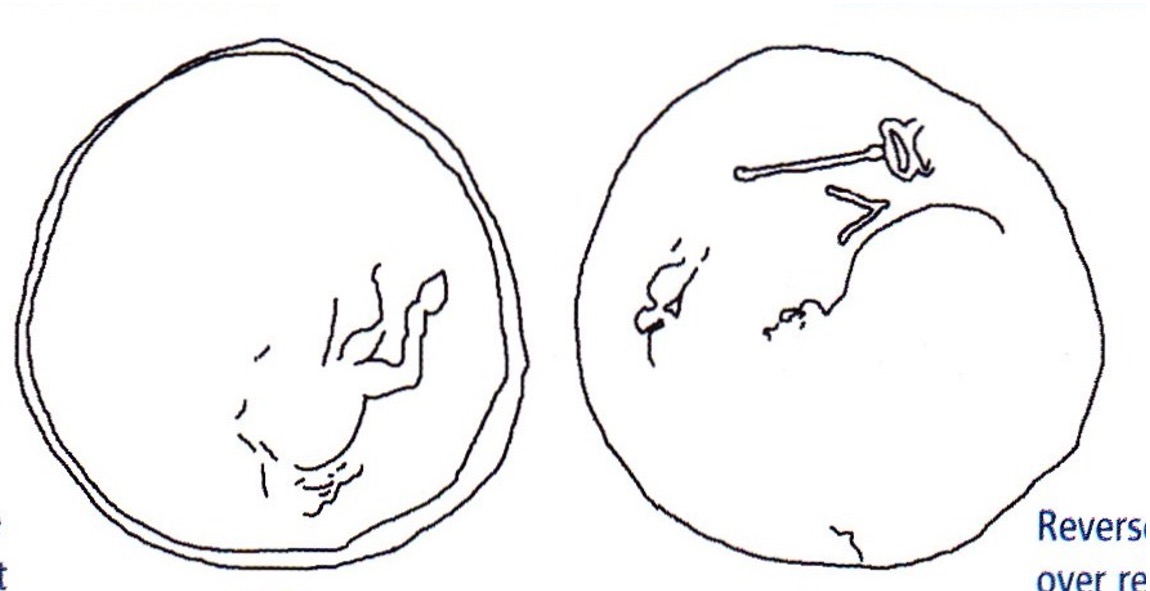
Λ Pegasus flying right (visible on obverse: rear leg, rear, tail of Pegasus, top of Λ)
ReverseInscription or printing placed on the reverse.:
Head of Athena right, wearing Corinthian helmet. Behind, Λ and kerykeion (visible on reverse: back of helmet, traces of locks of hair, kerykeion and left side of Λ).
Mint and issuing power
MintIdentifies the place of manufacture or issue of a numismatic object.ᵖ:
AuthorityIdentifies the authority in whose name (explicitly or implicitly) a numismatic object was issued.ᵖ:
Chronology
FromIdentifies the initial date in a range assigned in a numismatic context. 360 BCE toIdentifies the final date in a range assigned in a numismatic context.. 340 BCE
Classical 480-323 BCperiodTime period of the numismatic object.
Physical description
DenominationTerm indicating the value of a numismatic object. Examples: tetradrachm, chalkous, denarius.ᵖ:
Calciati 19905Calciati 1990, Leukas n° 92-95, the differences between the numbers being stylistic. The reference on p. 416 at the end of entry no. 92 to overstrikes should cite no. 47-54 rather than 44-54.
^Fischer-Bossert, Wolfgang (1999), Chronologie der Didrachmenprägung von Tarent, 510-280 v. Chr., Berlin, De Gruyter, xvii, 495 p., [84] pl.
^MacDonald, David (2002), "Sicilian and Southern Italian overstrikes over Pegasoi," Nomismatika Chronika 21, p. 55-64.
^Macdonald, David (2009), Overstruck Greek coins: studies in Greek chronology and monetary theory, Whitman Publishing, Atlanta.
^Hoover, Oliver D. (2018), The Handbook of Greek Coinage Series, Volume 1. Handbook of Coins of Italy and Magna Graecia, Sixth to First Centuries BC., Lancaster-London, 2018, lxi, 527 pages, 23 cm


_-_MacDonald_2009,_14_overstruck_variety.jpg)
.jpg)
 periodTime period of the numismatic object.