AuthorityIdentifies the issuing power. The authority can be "pretended" when the name or the portrait of X is on the coin but he/she was not the issuing power. It can also be "uncertain" when there is no mention of X on the coin but he/she was the issuing power according to the historical sources:
Chronology
FromIdentifies the initial date in a range assigned in a numismatic context. 412 BCE toIdentifies the final date in a range assigned in a numismatic context.. 400 BCE
Classical 480-323 BCperiodTime period of the numismatic object.
Physical description
MetalThe physical material (usually metal) from which an object is made.: Silver
WeightWeight of the numismatic object (in grams).in grams: 8.508.5 g <br />8,500 mg <br />
DenominationTerm indicating the value of a numismatic object. Examples: tetradrachm, chalkous, denarius.: didrachm
ObverseInscription or printing placed on the obverse.:
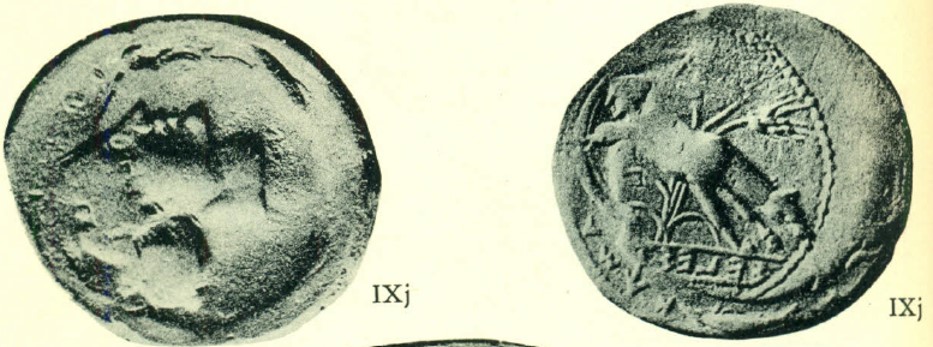
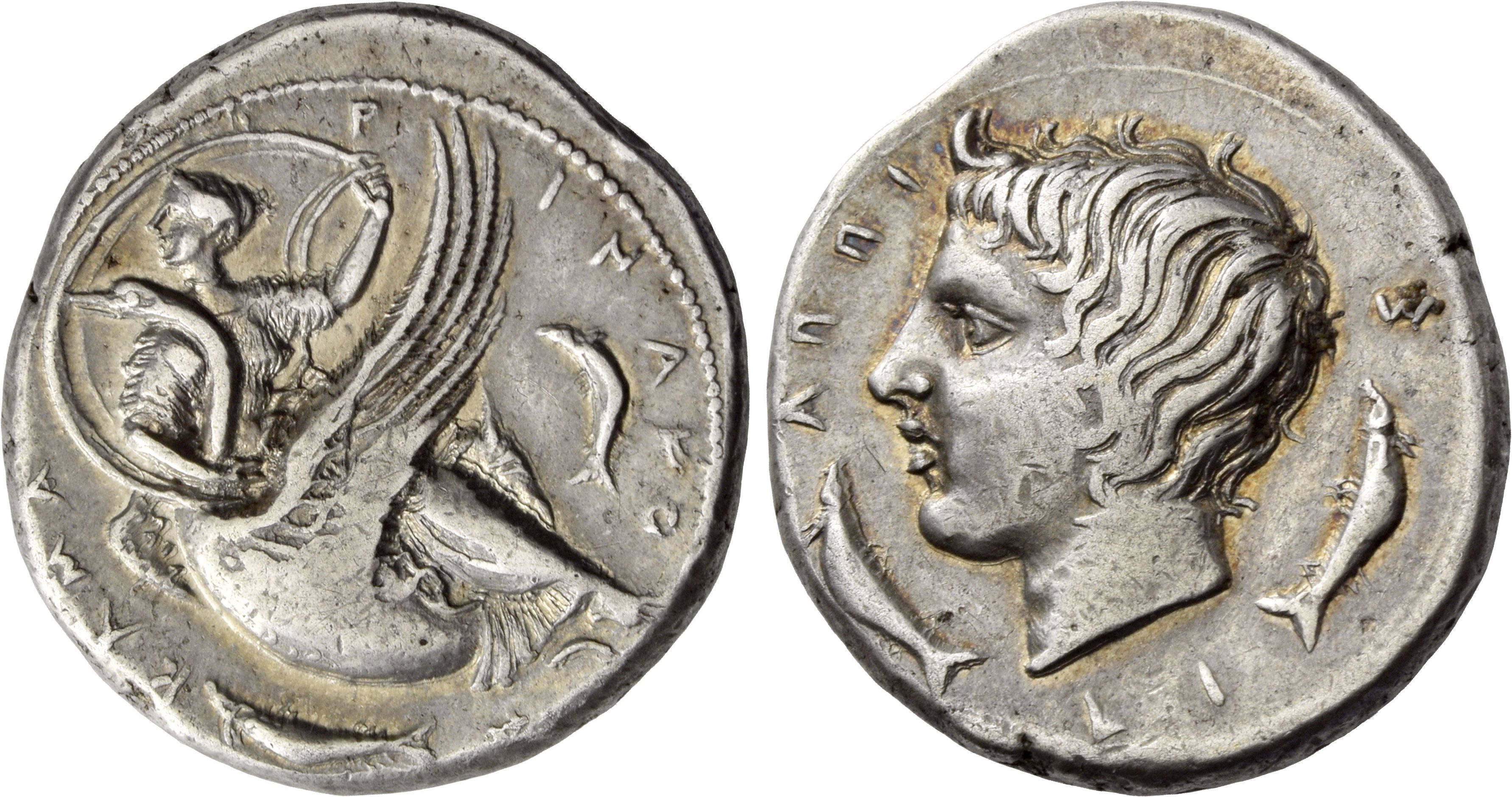
KAMA – P – INAIO – N (Greek) The nymph Camarina, with head l., dressed in low-necked chiton leaving the breast partly bare and with crossed legs, riding on swan l. over curved waves. She clasps with l. hand the swan's neck while r. holds billowing chiton, in field, two fishes swimming upwards
ReverseInscription or printing placed on the reverse.:
ΙΠΠΑ – PΙ – Σ retrograde (Greek) Head of the river-god Hipparis l., flanked by two fishes swimming upwards
Mint and issuing power
MintIdentifies the place of manufacture or issue of a numismatic object.ᵖ:
AuthorityIdentifies the authority in whose name (explicitly or implicitly) a numismatic object was issued.ᵖ:
Chronology
FromIdentifies the initial date in a range assigned in a numismatic context. 415 BCE toIdentifies the final date in a range assigned in a numismatic context.. 405 BCE
Classical 480-323 BCperiodTime period of the numismatic object.
Physical description
DenominationTerm indicating the value of a numismatic object. Examples: tetradrachm, chalkous, denarius.ᵖ:


 periodTime period of the numismatic object.