THIS IS ONLY A TEST WIKI - the real SILVER wiki is available at https://silver.kbr.be

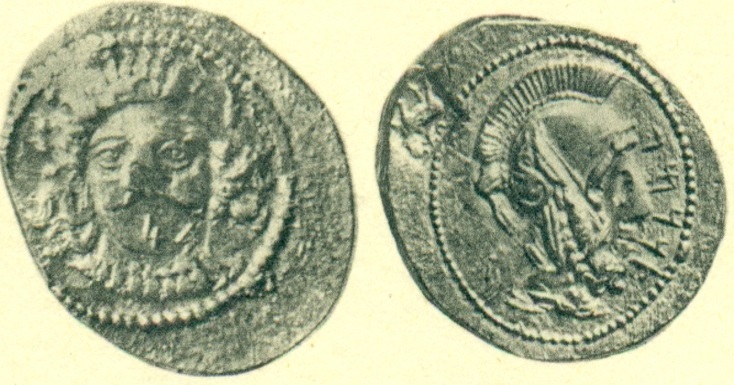
2556 - Tarsus (double siglos female head/bearded head) over Side (Athena/Apollo) (New York, ANS, SNG Berry 1294)

From SILVER
SILVER IDUnique ID of the page : 2556


378 BCE - 362 BCE | TRKMW (in Aramaic characters)

Images
Overstriking coin
Tarsus_2556_Berry_1294.jpg
Overstruck variety
Side Athena Apollo.jpg [1]
Location/history
Sale(s)Sale(s) : Classical Numismatic Group, 27, 29 Sept. 1993, 683
Private collection(s)Private collection(s) : SNG Berry, n° 1294

Overstriking coin

Description
ObverseInscription or printing placed on the obverse.: Female head facing slightly to left, hair in ampyx, wearing earring and necklace. Dotted border. ReverseInscription or printing placed on the reverse.: TRKMW (in Aramaic characters) (Aramaic) Bearded head right, wearing crested Attic helmet, drapery around neck. Border of dots.
Mint and issuing power
MintIdentifies the place of manufacture or issue of a numismatic object.: Tarsus Ancient regionAncient region. Cilicia Modern countryModern country: Turkey AuthorityIdentifies the issuing power. The authority can be "pretended" when the name or the portrait of X is on the coin but he/she was not the issuing power. It can also be "uncertain" when there is no mention of X on the coin but he/she was the issuing power according to the historical sources: Tarkumuwa (Datames), satrap of Cilicia, Persian Empire
Chronology
FromIdentifies the initial date in a range assigned in a numismatic context. 378 BCE toIdentifies the final date in a range assigned in a numismatic context.. 362 BCE Classical 480-323 BC Nomisma.org periodTime period of the numismatic object.

Physical description
MetalThe physical material (usually metal) from which an object is made.: Silver Nomisma.org WeightWeight of the numismatic object (in grams). in grams: 10.7110.71 g <br />10,710 mg <br /> DenominationTerm indicating the value of a numismatic object. Examples: tetradrachm, chalkous, denarius.: double siglos Nomisma.org AxisDescribes the directional relationship between the obverse and reverse of a numismatic object.: 44 mm <br />0.4 cm <br />
StandardStandard.: Persian
References
Coin referenceReference of the Coin: SNG Berry, 1294, Callataÿ 2000, 109, pl. XIII, 8, Callataÿ 2018b, p. 146, n° 38 Coin series referenceReference to coin series study: Moysey 19861Moysey 1986, obv. O12, Callataÿ 20002Callataÿ 2000, 109, pl. XIII, 8, Callataÿ 2018b3Callataÿ 2018b, p. 146, n° 38
Coin series web referenceCoin series web references:

Overstruck type

Description
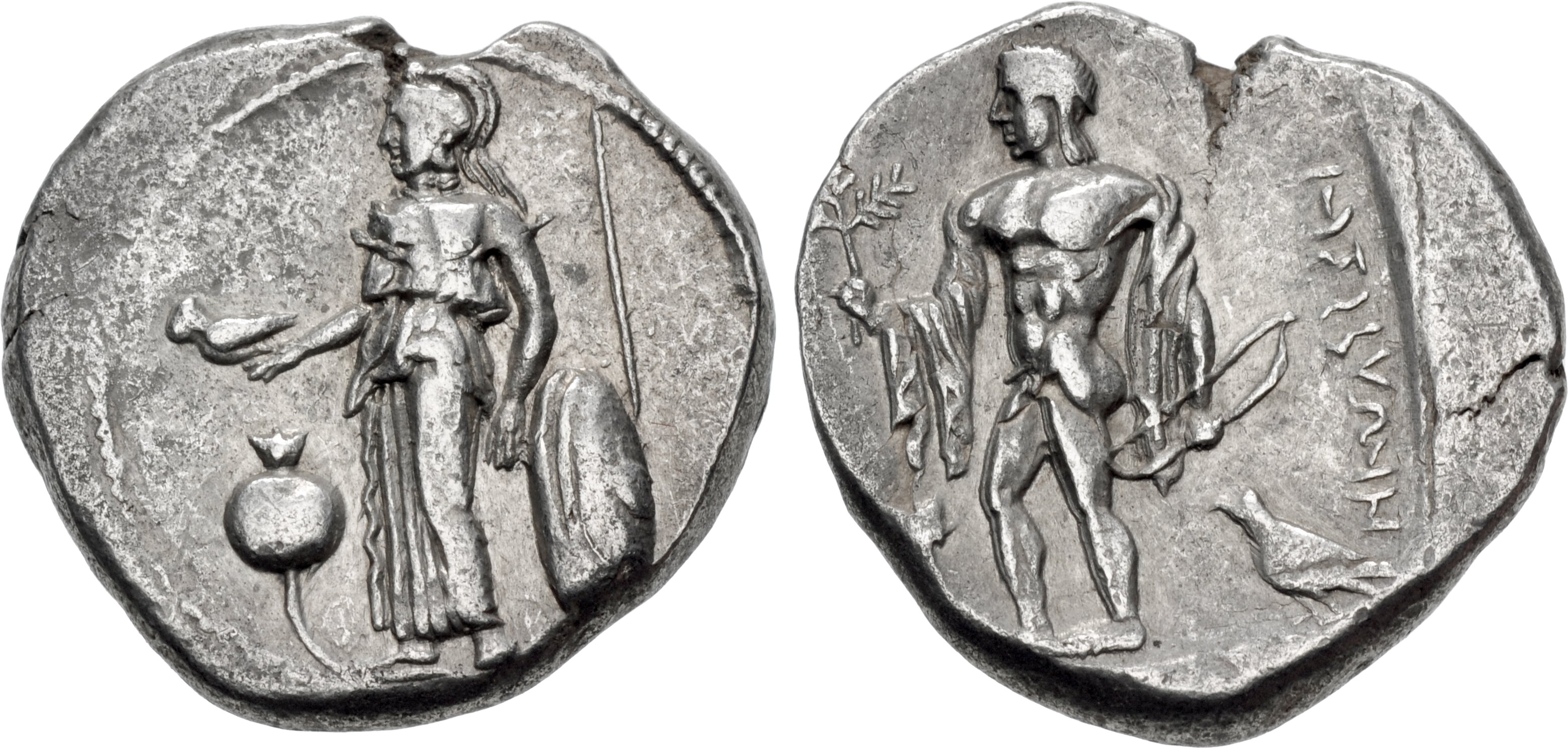
ObverseInscription or printing placed on the obverse.: Athena standing Athena left, holding Nike in right hand, resting left hand on shield. In field, pomegrenate. Border of dots (visible on obverse). ReverseInscription or printing placed on the reverse.: Apollo standing left (visible on reverse).
Mint and issuing power
MintIdentifies the place of manufacture or issue of a numismatic object. : Side Ancient regionAncient region.  Pamphylia Modern countryModern country: Turkey AuthorityIdentifies the authority in whose name (explicitly or implicitly) a numismatic object was issued. : Persian Empire
Chronology
FromIdentifies the initial date in a range assigned in a numismatic context. 400 BCE toIdentifies the final date in a range assigned in a numismatic context.. 380 BCE Classical 480-323 BC Nomisma.org periodTime period of the numismatic object.
Physical description
DenominationTerm indicating the value of a numismatic object. Examples: tetradrachm, chalkous, denarius. : double siglos Nomisma.org StandardStandard. : Persian
References
Coin type referenceReference to coin series study : Atlan 19674Atlan 1967, SNG France 35SNG France 3, n° 639–640
Coin series web reference overstruckCoin series web references overstruck:
Additional data
Frequency of overstrikesFrequency of overstrikes: rare and concentrated Level of confidenceLevel of confidence of the identification: sure
RemarksRemarks: "overstruck on Side (“the standing Athena with pomegranate to left and (two Pamphylian letters) to right is visible under the obverse type; the standing Apollo with patera and long laurel branch can be seen under the reverse type”)"