ObverseInscription or printing placed on the obverse.:
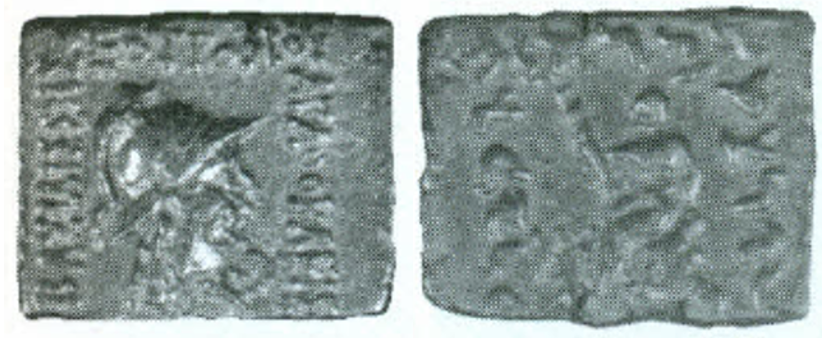
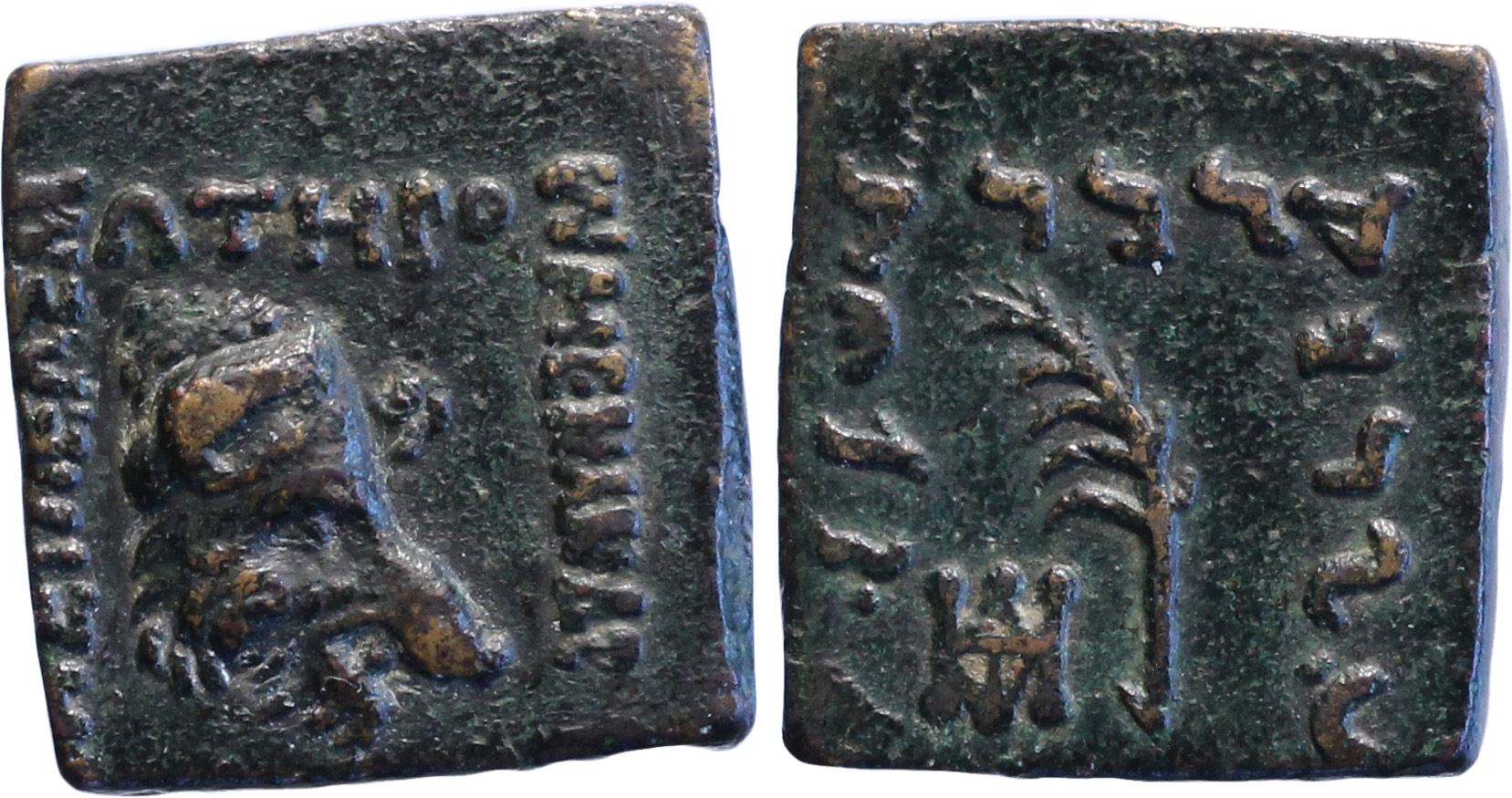
ΒΑΣΙΛΙΣΣΗΣ ΘΕΟΤΡΟΠΟΥ ΑΓΑΘΟΚΛΕΙΑΣ (Greek) Head of Athena right, wearing a crested Boiotian helmet.
ReverseInscription or printing placed on the reverse.:
Maharajasa tratarasa dhramikasa Stratasa (of Great King Straton the Just Savior) (Kharoshthi) Heracles seated on rock left, holding club. In inner right field, monogram.
Mint and issuing power
MintIdentifies the place of manufacture or issue of a numismatic object.:
AuthorityIdentifies the issuing power. The authority can be "pretended" when the name or the portrait of X is on the coin but he/she was not the issuing power. It can also be "uncertain" when there is no mention of X on the coin but he/she was the issuing power according to the historical sources:
FromIdentifies the initial date in a range assigned in a numismatic context. 110 BCE toIdentifies the final date in a range assigned in a numismatic context.. 100 BCE
Hellenistic 323-30 BCperiodTime period of the numismatic object.
Physical description
MetalThe physical material (usually metal) from which an object is made.: Bronze
WeightWeight of the numismatic object (in grams).in grams: 8.48.4 g <br />8,400 mg <br />
DenominationTerm indicating the value of a numismatic object. Examples: tetradrachm, chalkous, denarius.: denomination B
DiameterDescribes diameter of an object (in mm).: 2020 mm <br />2 cm <br />
FromIdentifies the initial date in a range assigned in a numismatic context. 155 BCE toIdentifies the final date in a range assigned in a numismatic context.. 130 BCE
Hellenistic 323-30 BCperiodTime period of the numismatic object.
Physical description
DenominationTerm indicating the value of a numismatic object. Examples: tetradrachm, chalkous, denarius.ᵖ:
_(Agathocleia-Strato_I).png)

.png)
 periodTime period of the numismatic object.