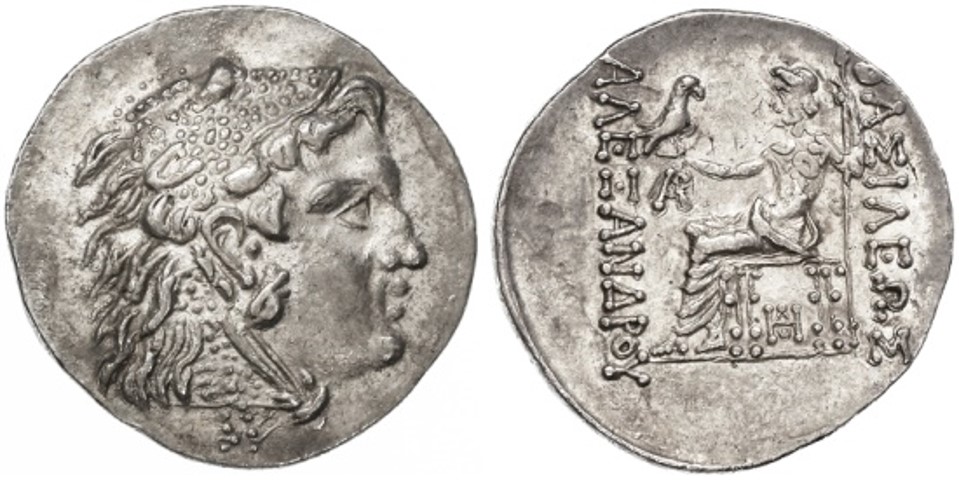
AuthorityIdentifies the issuing power. The authority can be "pretended" when the name or the portrait of X is on the coin but he/she was not the issuing power. It can also be "uncertain" when there is no mention of X on the coin but he/she was the issuing power according to the historical sources:
FromIdentifies the initial date in a range assigned in a numismatic context. 120 BCE toIdentifies the final date in a range assigned in a numismatic context.. 90 BCE
hellenistic periodTime period of the numismatic object.
Physical description
MetalThe physical material (usually metal) from which an object is made.: Silver
WeightWeight of the numismatic object (in grams).in grams: 16.4416.44 g <br />16,440 mg <br />
DenominationTerm indicating the value of a numismatic object. Examples: tetradrachm, chalkous, denarius.: tetradrachm
DiameterDescribes diameter of an object (in mm).: 3333 mm <br />3.3 cm <br />
ObverseInscription or printing placed on the obverse.:
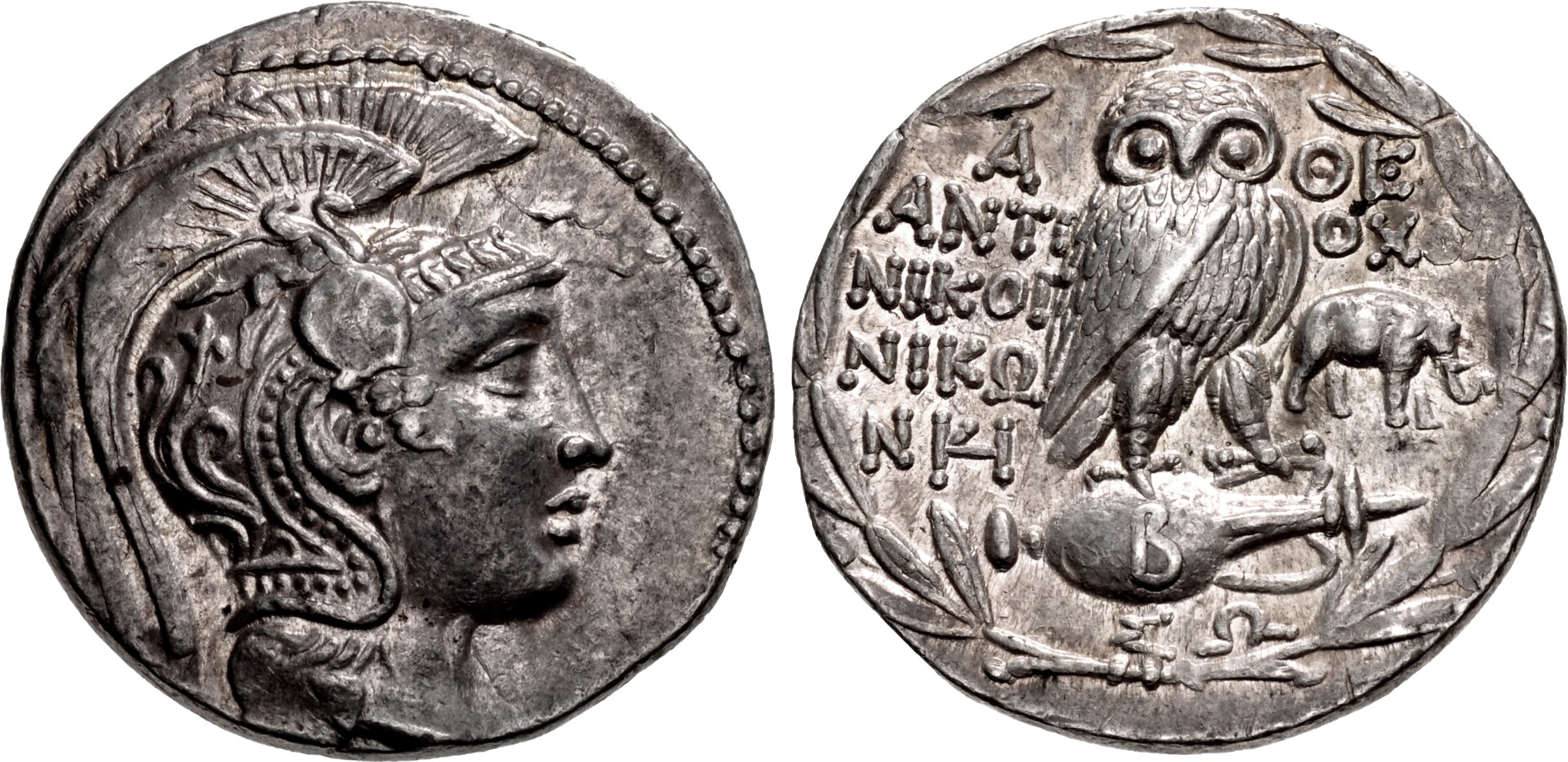
Helmeted head of Athena Parthenos right
ReverseInscription or printing placed on the reverse.:
(Greek) Owl standing right, head facing, on amphora, magistrates' names in fields, monogram to lower left, to right, elephant standing right, B on amphora, ΣΩ below, all within wreath
Mint and issuing power
MintIdentifies the place of manufacture or issue of a numismatic object.ᵖ:
AuthorityIdentifies the authority in whose name (explicitly or implicitly) a numismatic object was issued.ᵖ:
Chronology
FromIdentifies the initial date in a range assigned in a numismatic context. 131 BCE toIdentifies the final date in a range assigned in a numismatic context.. 130 BCE
Hellenistic 323-30 BCperiodTime period of the numismatic object.
Physical description
DenominationTerm indicating the value of a numismatic object. Examples: tetradrachm, chalkous, denarius.ᵖ:
"It appears to be overstruck on an earlier Odessos issue of Alexander the Great (like Price 1168) struck from 280 - 200 B.C.E. and was taken back into the mint for restriking. Looking at Zeus on the reverse across the left side of his shoulder to chest, one can see the KOI mintmark of the earlier issue. Traces of other letters can also be seen" (nb: David MacDonald: The seller thinks this is struck over an earlier Odessos. I think this is wrong and that the host coin was an Athenian New Style: yes 131/130 BC Thompson 396c).