AuthorityIdentifies the issuing power. The authority can be "pretended" when the name or the portrait of X is on the coin but he/she was not the issuing power. It can also be "uncertain" when there is no mention of X on the coin but he/she was the issuing power according to the historical sources:
FromIdentifies the initial date in a range assigned in a numismatic context. 149 BCE toIdentifies the final date in a range assigned in a numismatic context.. 147 BCE
Hellenistic 323-30 BCperiodTime period of the numismatic object.
Physical description
MetalThe physical material (usually metal) from which an object is made.: Silver
WeightWeight of the numismatic object (in grams).in grams: 3.353.35 g <br />3,350 mg <br />
DenominationTerm indicating the value of a numismatic object. Examples: tetradrachm, chalkous, denarius.: drachma
AxisDescribes the directional relationship between the obverse and reverse of a numismatic object.: 1212 mm <br />1.2 cm <br />
FromIdentifies the initial date in a range assigned in a numismatic context. 147 BCE toIdentifies the final date in a range assigned in a numismatic context.. 147 BCE
Hellenistic 323-30 BCperiodTime period of the numismatic object.
Physical description
DenominationTerm indicating the value of a numismatic object. Examples: tetradrachm, chalkous, denarius.ᵖ:
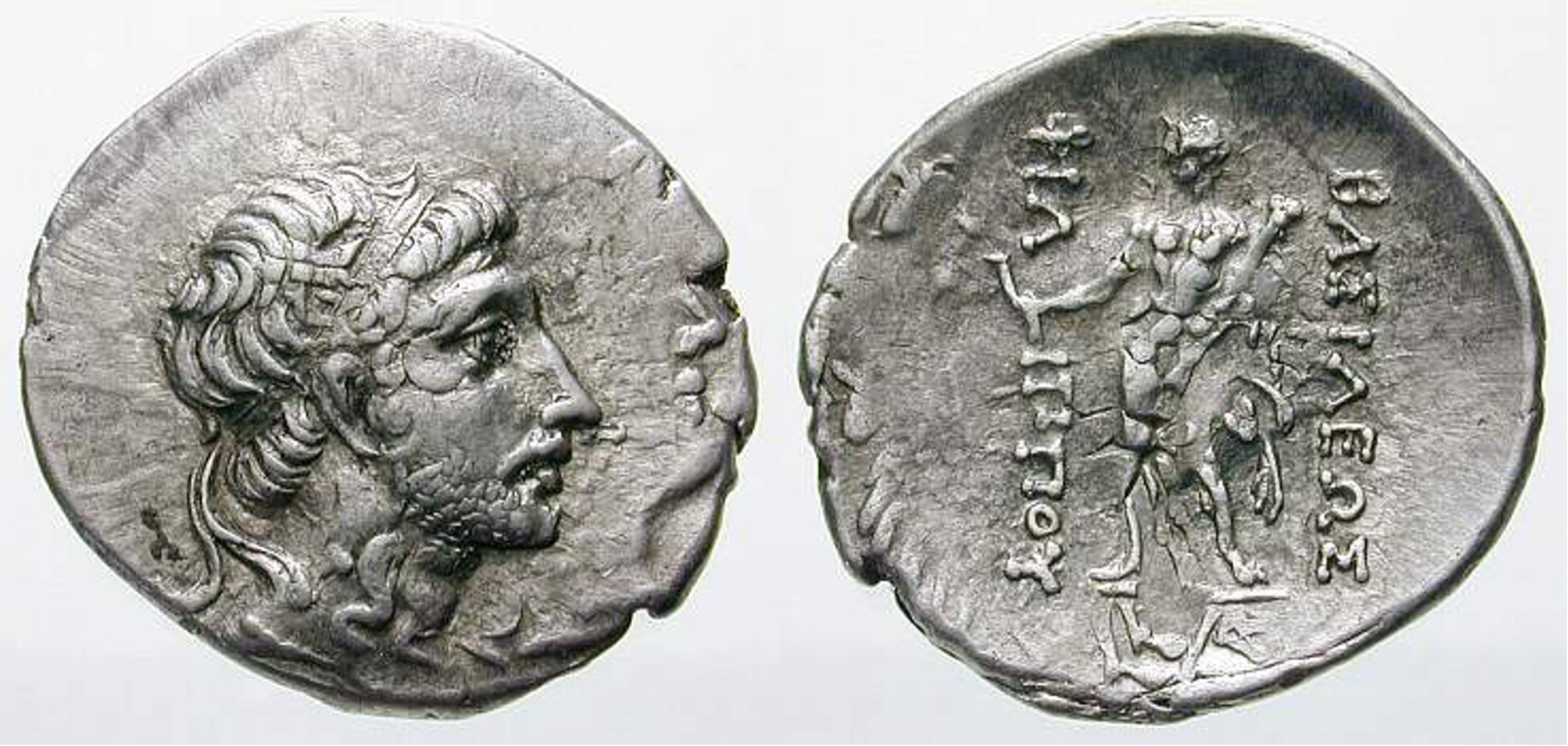
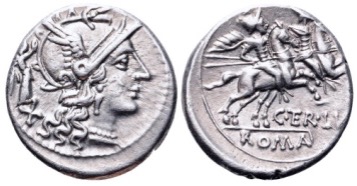
David Sear: "A remarkable Macedonian regal drachm overstruck on a denarius of C. Terentius Lucanus that Crawford dates to 147 BC (the dating of which should now be revised to circa 150-148 BC). The evidence of the undertype clearly indicates a date substantially later than the downfall of the Macedonian monarchy, which had ended with the defeat of Perseus by the Roman general L. Aemilius Paullus at Pydna in June of 168 BC. The only logical explanation of the existence of a regal type apparently belonging to the 140s is that the piece represents an issue by the Macedonian pretender Andriskos (‘Philip VI’)"


 periodTime period of the numismatic object.