ObverseInscription or printing placed on the obverse.:
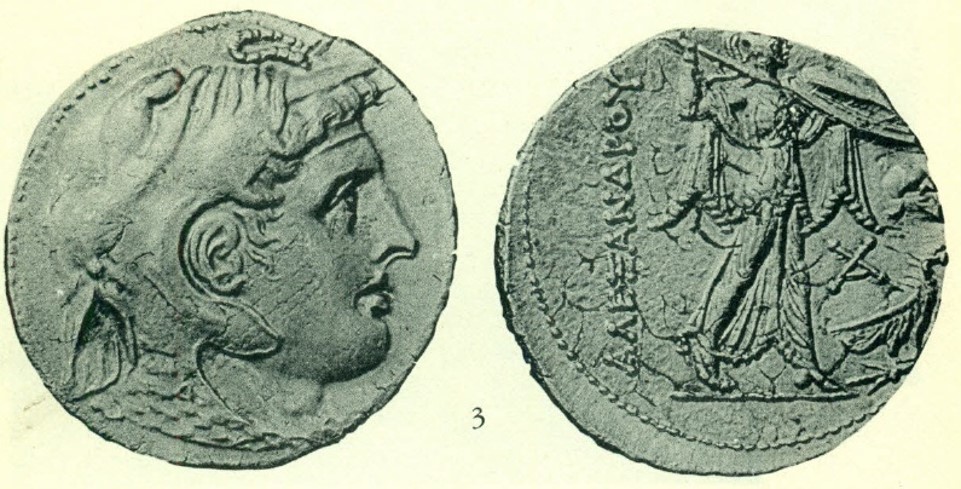
Head of the deified Alexander III to right, wearing a diadem with the horn of Zeus Ammon, an elephant skin headdress and aegis around his neck. Before elephant's ear, Δ. Border of dots.
ReverseInscription or printing placed on the reverse.:
ΑΛΕΞΑΝΔΡΟΥ (Greek) Athena Alkidemos advancing to right, brandishing spear with her right hand and with a shield on her left arm. In the right field, Corinthian helmet, below monogram (AX) and eagle on thunderbolt. Border of dots.
Mint and issuing power
MintIdentifies the place of manufacture or issue of a numismatic object.:
AuthorityIdentifies the issuing power. The authority can be "pretended" when the name or the portrait of X is on the coin but he/she was not the issuing power. It can also be "uncertain" when there is no mention of X on the coin but he/she was the issuing power according to the historical sources:
FromIdentifies the initial date in a range assigned in a numismatic context. 306 BCE toIdentifies the final date in a range assigned in a numismatic context.. 305 BCE
Hellenistic 323-30 BCperiodTime period of the numismatic object.
Physical description
MetalThe physical material (usually metal) from which an object is made.: Silver
WeightWeight of the numismatic object (in grams).in grams: 15.6615.66 g <br />15,660 mg <br />
DenominationTerm indicating the value of a numismatic object. Examples: tetradrachm, chalkous, denarius.: tetradrachm
AxisDescribes the directional relationship between the obverse and reverse of a numismatic object.: 1212 mm <br />1.2 cm <br />
DiameterDescribes diameter of an object (in mm).: 3030 mm <br />3 cm <br />
ObverseInscription or printing placed on the obverse.:
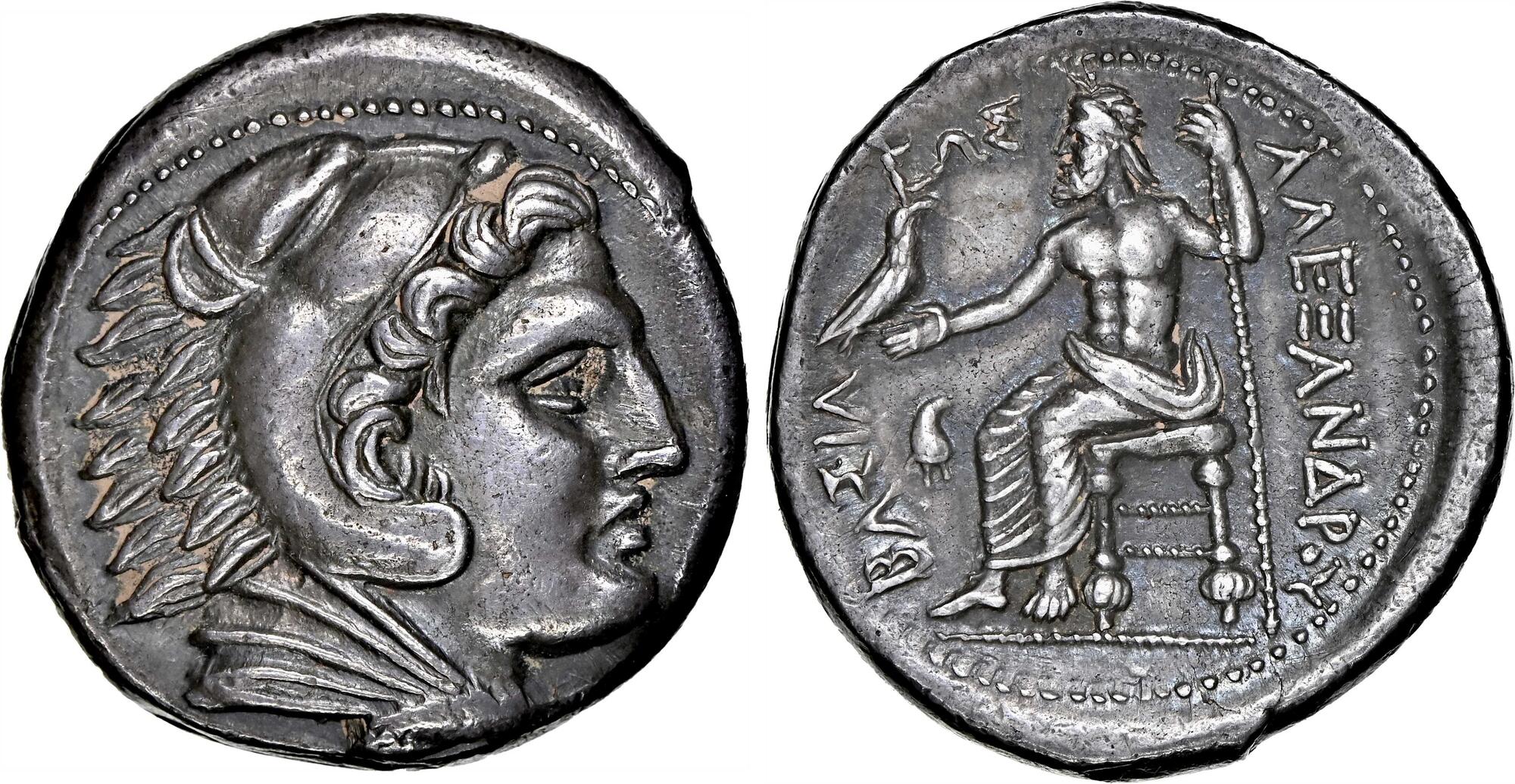
Head of Herakles to right, wearing lion skin headdress (visible: indistinct marks).
ReverseInscription or printing placed on the reverse.:
ΑΛΕΞΑΝΔΡΟΥ (Greek) Zeus Aëtophoros seated to left, holding sceptre (visible: on cheek of Alexander, traces of Zeus' throne, with beaded line of his staff behind it).
Mint and issuing power
MintIdentifies the place of manufacture or issue of a numismatic object.ᵖ:
FromIdentifies the initial date in a range assigned in a numismatic context. 330 BCE toIdentifies the final date in a range assigned in a numismatic context.. 300 BCE
Hellenistic 323-30 BCperiodTime period of the numismatic object.
Physical description
DenominationTerm indicating the value of a numismatic object. Examples: tetradrachm, chalkous, denarius.ᵖ:


 periodTime period of the numismatic object.