AuthorityIdentifies the issuing power. The authority can be "pretended" when the name or the portrait of X is on the coin but he/she was not the issuing power. It can also be "uncertain" when there is no mention of X on the coin but he/she was the issuing power according to the historical sources:
Chronology
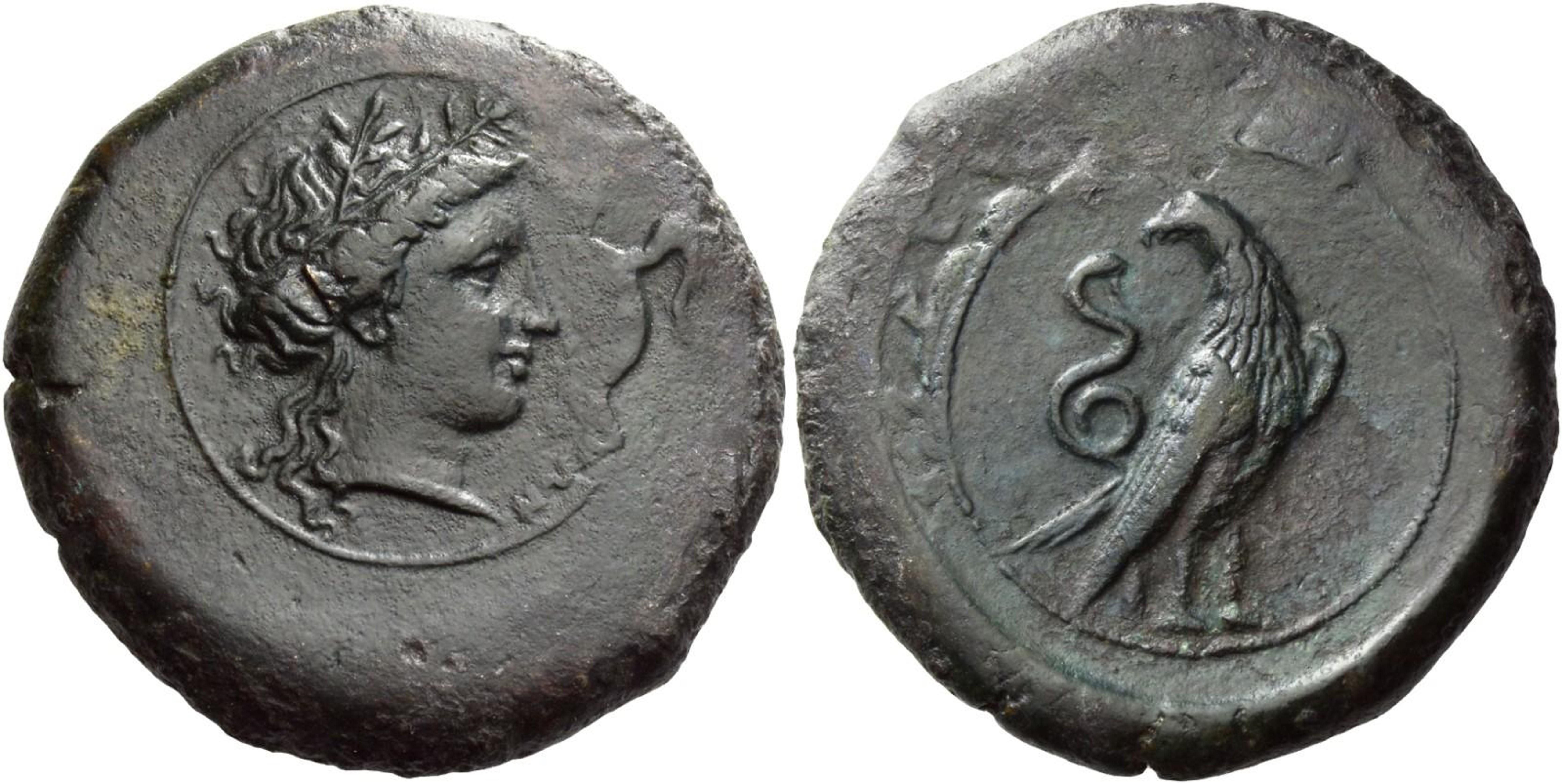
FromIdentifies the initial date in a range assigned in a numismatic context. 335 BCE toIdentifies the final date in a range assigned in a numismatic context.. 325 BCE
Classical 480-323 BCperiodTime period of the numismatic object.
Physical description
MetalThe physical material (usually metal) from which an object is made.: Bronze
WeightWeight of the numismatic object (in grams).in grams: 20.1020.1 g <br />20,100 mg <br />
DenominationTerm indicating the value of a numismatic object. Examples: tetradrachm, chalkous, denarius.: dilitron
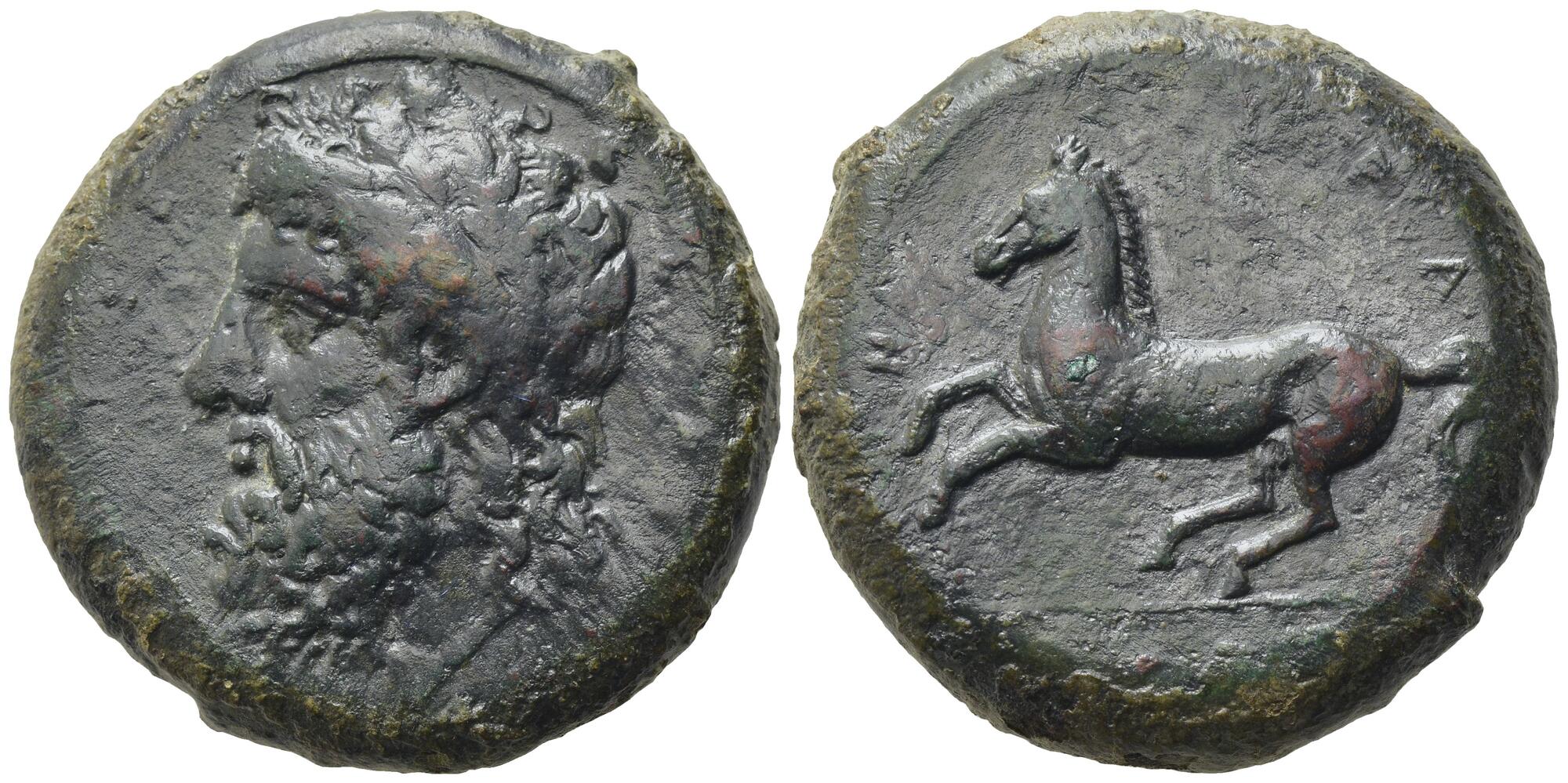
FromIdentifies the initial date in a range assigned in a numismatic context. 339 BCE toIdentifies the final date in a range assigned in a numismatic context.. 334 BCE
Classical 480-323 BCperiodTime period of the numismatic object.
Physical description
DenominationTerm indicating the value of a numismatic object. Examples: tetradrachm, chalkous, denarius.ᵖ:
The large bronze drachms that were produced in 4th century Sicily by a variety of small cities almost invariably reused the common drachms of Syracuse for their flans, and often their original designs can be seen below those of the newer types (as the tail of Pegasos, which waves before the head of Sikelia on this piece!)
.jpg)
_overstruck_variety.jpg)
 periodTime period of the numismatic object.