AuthorityIdentifies the issuing power. The authority can be "pretended" when the name or the portrait of X is on the coin but he/she was not the issuing power. It can also be "uncertain" when there is no mention of X on the coin but he/she was the issuing power according to the historical sources:
Chronology
FromIdentifies the initial date in a range assigned in a numismatic context. 250 BCE toIdentifies the final date in a range assigned in a numismatic context.. 220 BCE
Hellenistic 323-30 BCperiodTime period of the numismatic object.
Physical description
MetalThe physical material (usually metal) from which an object is made.: Bronze
WeightWeight of the numismatic object (in grams).in grams: 7.87.8 g <br />7,800 mg <br />
DenominationTerm indicating the value of a numismatic object. Examples: tetradrachm, chalkous, denarius.: hemiobol
FromIdentifies the initial date in a range assigned in a numismatic context. 246 BCE toIdentifies the final date in a range assigned in a numismatic context.. 221 BCE
Hellenistic 323-30 BCperiodTime period of the numismatic object.
Physical description
DenominationTerm indicating the value of a numismatic object. Examples: tetradrachm, chalkous, denarius.ᵖ:
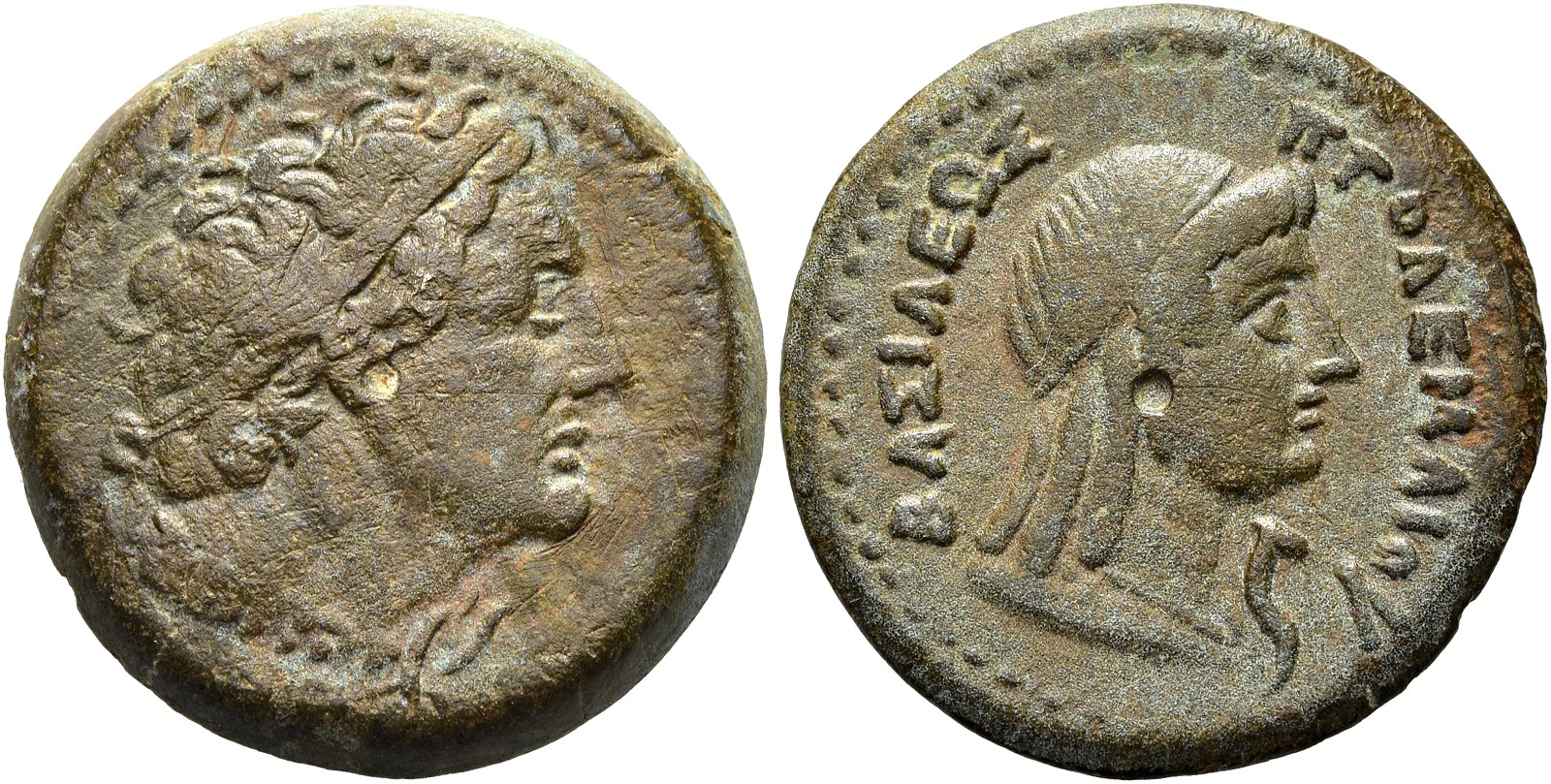
"Neat bronze that was overstruck on a coin of Ptolemaic Egypt, but with traces of the underlying type still visible. On the obverse, the head of Zeus is plainly visible, but turn the coin 180 degrees, and you can see the face of one of the Ptolemies as well"



 periodTime period of the numismatic object.