AuthorityIdentifies the issuing power. The authority can be "pretended" when the name or the portrait of X is on the coin but he/she was not the issuing power. It can also be "uncertain" when there is no mention of X on the coin but he/she was the issuing power according to the historical sources:
FromIdentifies the initial date in a range assigned in a numismatic context. 225 BCE toIdentifies the final date in a range assigned in a numismatic context.. 215 BCE
Hellenistic 323-30 BCperiodTime period of the numismatic object.
Physical description
MetalThe physical material (usually metal) from which an object is made.: Bronze
WeightWeight of the numismatic object (in grams).in grams: 4.054.05 g <br />4,050 mg <br />
AxisDescribes the directional relationship between the obverse and reverse of a numismatic object.: 44 mm <br />0.4 cm <br />
FromIdentifies the initial date in a range assigned in a numismatic context. 274 BCE toIdentifies the final date in a range assigned in a numismatic context.. 239 BCE
Hellenistic 323-30 BCperiodTime period of the numismatic object.
"Surfrappé sur Antigone Gonatas du type Gabler 1935, 12-14. SNG Cop. 384."
References
^Head, Barclay Vincent, Poole, Reginald Stuart (1884), British Museum. Catalogue of the Greek coins : Central Greece (Locris, Phocis, Boetia and Euboea), London, lxix, 158 p., 24 pl.
^Vlachogianni, Elena (2000), "A hoard of coins from Thebes: the problem of the Boitian overstrikes", Nomismatika chronika 19, p. 78-113.
^Demetriadi, Basil (2006), Triton IX (The BCD Collection of the Coinage of Boiotia), 10 Jan. 2006, Lancaster
^Oeconomides, Mando (2004), Sylloge Nummorum Graecorum Greece Grèce 3. Musée Numismatique d'Athènes. Collection Antoine Christomanos, Athens, 113 p. (898 coins)
^Hoover, Oliver D. (2014), Handbook of Greek Coinage Series 4. Northern and Central Greece : Achaia Phthiotis, Ainis, Magnesia, Malis, Oita, Perrhaibia, Thessaly, Akarnania, Aitolia, Lokris, Phokis, Boiotia, Euboia, Attica, Megaris and Corinthia, sixth to first centuries BC, Lancaster, lxxi, 563 p.
^Gaebler, Hugo (1935), Die antiken Münzen Nord-Griechenlands, unter Leitung von Theodor Wiegand. Band III, Makedonia und Paionia. 2. Abt., Verlag W. de Gruyter, Berlin
^Hoover, Oliver D. (2016), Handbook of coins of Macedon and its neighbors. 3. Part I: Macedon, Illyria, and Epeiros, sixth to first centuries BC, Lancaster, 437 p.
^Panagopoulou, Katerina (2020), The Early Antigonids. Coinage, Money, and the Economy, New York, ANS, xlv, 390 p., 63 pl.
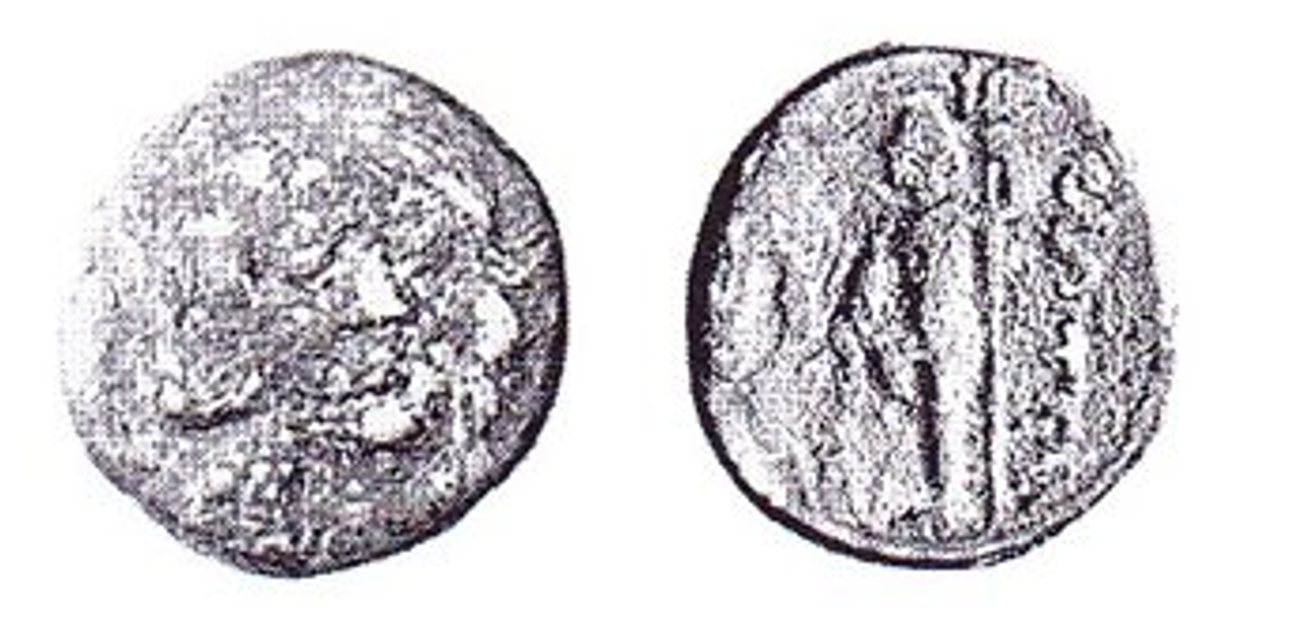

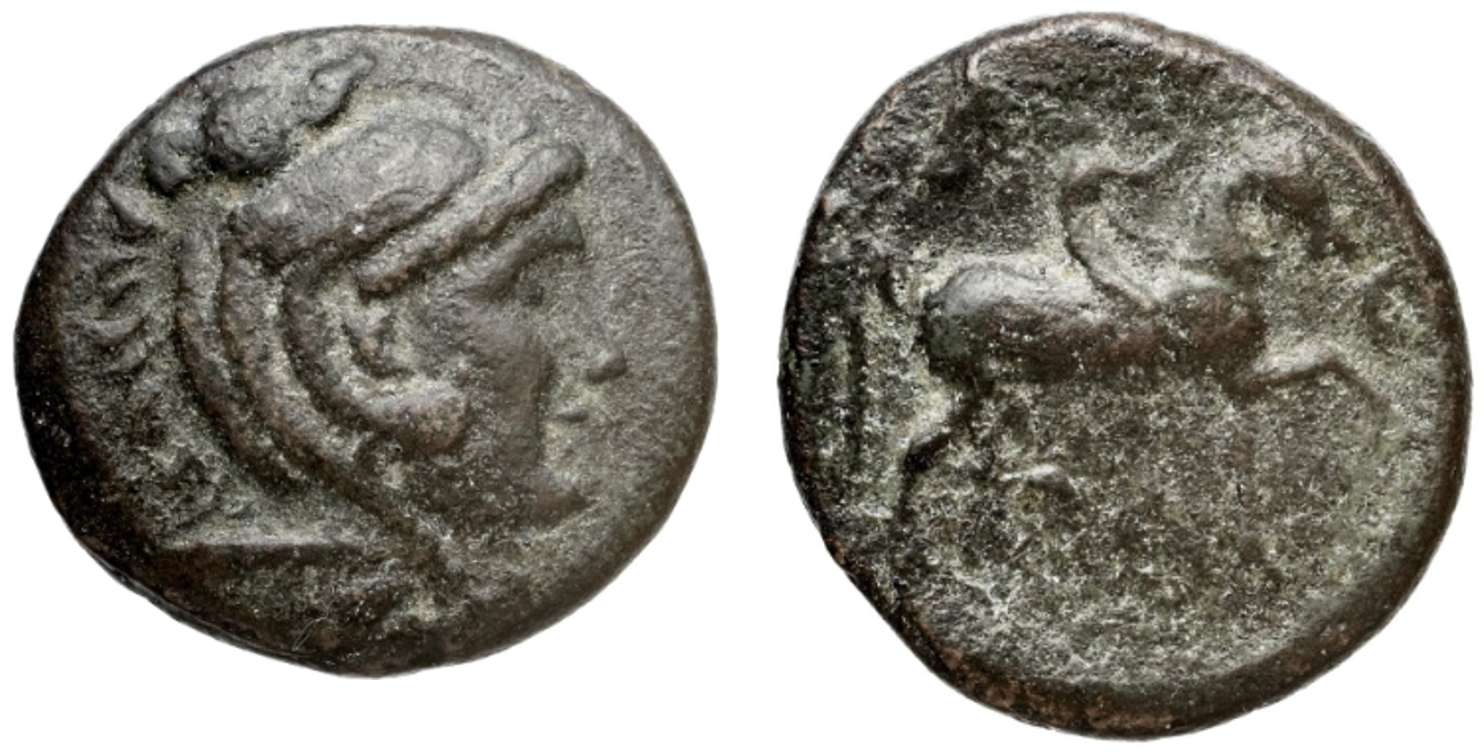
.png)
 periodTime period of the numismatic object.